3 Ways Sexy Plastic Can Make You Smarter.

Know when it’s time to destroy the molds. Of who you were. You’re not there anymore. I believe I’m smarter and better than the day before. Know when it’s time to fire the creative team or the inner and outer voices that stir your ego, feed you stories that don’t suit your life path and tell you how you must follow rules you didn’t create.

Richard M. Rosso, CFP's avatarRandom Thoughts of a Money Muse

As I kid, I was turned on by plastic.

Plastic models.

Well, plastic model (hobby) kits.

From a company named Aurora.

A wonderful place.

Fuck off Willy Wonka and your chocolate minions.

This factory was IT.

Aurora

Oh Aurora how I miss your wonderfully kitschy plastic pop-culture glue and snap together sexiness.

It was a company I adored. No. more than adored. I was obsessed.

Everything they manufactured was perfect in my eyes.

Aurora Plastics Corporation was founded in 1950 by Joseph Giammarino in Brooklyn, New York (my hometown, sniff).

I thank him to this day. He was a model master.

I required every molded monster, television personality that came of the magical Aurora factory. Even the box art was cool.

Don’t ask me how much the empty boxes go for on auction sites.

aurora box Empty box. – $300.Gasp.

My favorite series was the controversial Monster Scenes plastic snap-together kits.

They…

View original post 823 more words

My Mother Never Left The House. It’s Not The Same For You.

Featured

Mom was prisoner in a tiny one-bedroom apartment.

She rarely left the house. She was afraid of the world. We were on welfare. It embarrassed the hell out of me.

I was sent out to buy the stuff we needed to survive in the 1970’s.

Tampons, beer, vodka.

tampons and beer

I’m sure I was sent out for food. All I remember was the embarrassment of waiting in a grocery line holding tampons and Old Milwaukee. Trying not to make eye contact.

Back then, when I was ten, the owners of the small stores knew us so I was given permission to purchase items that stole my childhood and emasculated me for a decade. I believe my mother granted “favors” to some of the shop owners based on the looks she got when we entered but I don’t have proof.

Mr. Mangini allowed me to pay for alcohol with food stamps.

Like he was doing me a big favor.

Moms today can’t afford to stay home. They don’t send their kids to liquor stores to stock up either. Well, some do. I know them.

Most don’t.

Childcare expenses can motivate people to drink.

Several facts about child care expenses will shock you; the costs weigh heavy on American households.

Child care is a major expense in family budgets, often exceeding the costs of housing, food and even college tuition.

For middle-class families, the cost of center-based child care is 15-30% of gross income. For a family of three living at the poverty level, annual center-based child care costs can take up nearly half of family income. The average cost of center-based daycare in the U.S. is $11,666 annually (or $972 a month), according to the National Association of Child Care Resource & Referral Agencies.

No wonder couples are waiting to have children.

bratty kid

The U.S. birth rate reached an all-time low in 2013 according to a report from the Centers for Disease Control.

Although the greatest economic recession since the Great Depression is considered history, for the majority of Americans the financial strain of underemployment, sub-par wage growth and over indebtedness remains a part of daily life.

Unfortunately, most of the burden of child-care costs fall on the family. There’s little public assistance available and the benefits are fragmented.

So what to do?

Random Thoughts:

Get a handle on offsite child-care costs for your household at least two years before having a child. The Child Care Aware Calculator allows families to examine their financial situation both with and without the cost of child care. Factors such as cost of child care, work related expenses, monthly bills, and savings or retirement contributions are all included in the calculator.

Families will be able to get an idea of their monthly budget and how child care will impact that budget.

Bolster savings, cut expenses. I’m not saying it’s easy, but if you need to come up with another $300-$500 a month for offsite child care, mind the gap early and investigate methods to save more cash now. Meet with a certified financial professional who can help you devise a strategy.

Investigate work-related benefits as soon as possible. For example, a Dependent Care FSA lets you use pretax dollars to pay for eligible expenses related to care for your child, disabled spouse, elderly parent, or other dependent who is physically or mentally incapable of self-care, so you can work, or if you’re married, for your spouse to work, look for work or attend school full time. It’s time to do homework and contact your employer’s human resource department to understand benefits available.
The annual dollar limit on employee contributions to employer-sponsored health care FSAs is $2,550 in 2015.

The annual limit for dependent care FSAs or dependent care assistance plans (DCAPs) remains at $5,000 for qualifying individuals and those who are married and file a joint return, and will remain at $2,500 for those who are married and file separate returns.

Maximize available tax credits. If your employer doesn’t offer a flexible spending account, you can take full advantage of the child care tax credit. This credit allows you to itemize up to $3,000 in expenses per child per year, up to a $6,000 annual cap per family.

Once you’ve itemized the expenses, you can take a percentage of that and apply the tax credit.

You can use an FSA and a tax credit, however, any FSA money is applied to the tax credit cap first. If you withdraw $5,000 from an FSA, you can then itemize only $1,000 for the child care tax credit.

The percentage of expenses a family can claim steadily decreases as income rises, until families with AGI of $43,000 or more reach the minimum claim rate of 20 percent, qualifying for a maximum potential credit of $1,200. The credit is worth between 20 percent and 35 percent of child care expenses, depending on your family’s income. Meet with a tax professional early on to determine if tax credit are available to you.

Explore whether it’s beneficial for one party to remain at home. Crunch numbers using the Stay-At-Home Calculator available at www.parents.com.

After considering monthly incomes, expenses, childcare expenses, monthly work expenses and other annual expenses including federal income taxes paid, perhaps it’s a financially good idea for one party to remain at home instead of paying for professional child care. You may be surprised.

There’s no doubt child-care costs, which increase at 7% a year are a financial burden.

Research suggests investing in child care is good for the economy. Children are an investment in the future prosperity of a country. Studies show that increased access to quality, affordable child care raises employee morale and company loyalty, and can even save businesses as much as $3 billion a year, according to Child Care Aware.

Forget having kids. Why bother? It’s expensive. They won’t take care of you when you get old.

They’ll live with you until they’re 35.

People who possess zero parental instinct no longer feel pressured to have children.

Thank god.

Please don’t feel obligated.

I think my mother did and turned me into a tampon delivery service.

Never send boys for feminine hygiene products.

It can damage them for life.

boys buying kotex

Waking up A: Living the JA Life.

Richard M. Rosso, CFP's avatarRandom Thoughts of a Money Muse

It was the birth of Occupy Wall Street. Well, pre-birth. A genesis, that’s all I know. For me too. The start of an uprising. I was going to have lunch with my idol, new friend, a mentor. Any minute. Little did I realize, from this connection, this spark, the friendship that would ignite. The life-changing guidance I was about to receive at the foot of a muse. A master muse.

We were in the vicinity of Wall Street. On the concrete fringe. Lunch meeting  at a sushi place. I was nervous. Couldn’t breathe (even though this muse advises thousands to breathe – Breathe deep). Feverishly texting a former friend about how I was about to pass out. Pacing. Pace. Pace. Pace. Dizzy.

For me, it was like meeting Superman, or some other bigger-than-life hero. I know for a fact when JA was in first grade, donning a red cape blanket…

View original post 2,510 more words

From Accumulation to Distribution: A Retirement Crossroad.

Featured

As originally appeared in MarketWatch’s Retirement Weekly.

What’s been my greatest advice to people once they seriously consider retirement?

No it’s not create a budget.

It’s watch the movie “Castaway.”

Castaway one

Take notes. Life is about to get bumpy.

Money is at the bottom of the life list for surprises. There are enough academic studies that prove how people with formal retirement planning are more successful than those who don’t plan.

No, there’s another storm front to weather.

In the 2000 film Tom Hanks portrays a frenetic FedEx systems employee obsessed with time and productivity. During a Christmas evening flight to Malaysia, his delivery plane crashes in the Pacific Ocean. He is violently tossed and cast to a remote island where he remains trapped and surrounded by cascading ocean currents. Over four years, while loved ones consider him lost (they had a funeral), and the love of his life marries and moves on Chuck Noland survives, too.

The drama is layered with lessons of acceptance, perseverance, resourcefulness and a shift in perspective that takes Tom Hank’s character to a rural Texas farm-road crossing, an old FedEx truck route he’s traveled before. Although this time, the weight of his decision is heavy.

It will change his life forever.

Once that retirement decision is made you’ll feel that weight. You’ll stand on a double-yellow line at a crossroad.

Which direction will you turn?

Here are a few lessons to navigate the first and most stinging waves of retirement.

Random Thoughts:

Those truly ready to retire have a sixth sense of sorts. You will too. As the FedEx plane plummeted from a stormy night sky, the odds of human survival were remote. As the aircraft broke apart and sank like a stone, Chuck’s instincts kicked in. Miraculously, he made it to the surface.

A lone survivor.

Pre-retirees seem to sense when their employers’ planes are headed in a different direction than they are. Those I counsel often reference turbulence at work they no longer find appealing or willing to accommodate.

Stressful projects, new bosses. The changes that were easy to overcome before are no longer palatable. If you plan accordingly for retirement, 5-7 years out, you’ll be able to control your escape, maintain focus on an exit. Like Chuck, an event will motivate you to flee. There will be a sense of urgency to depart. For example, a client who recently retired from a large corporation turned in his resignation one day before the executive suite announced the sale of the finance unit he had worked in for 16 years. That’s the uncanny sixth sense I’m talking about. Be open to the message.

Are you listening?

The first year in retirement can be challenging. Prepare to churn through darkness, all the time jolted by waves of self-discovery. When Chuck Noland surfaced he was nowhere out of peril. In the middle of nowhere there was still quite a way to go before safety.

Even those with a well thought-out financial plan are not completely prepared for retirement. The emotional part, anyway. It’s a span of dark distance I call “the black hole” as you cross from accumulating wealth to depending on it. New retirees feel vulnerable through this stage. They go through the motions. They seek a destination. A place that is not on a map because it’s created by the retiree traveling the path.

During the first year in retirement, give yourself a chance to accept life changes. Let the waves jostle you. Use time to re-discover who you were before a 40-year career dominated your life. This should be a new and enriching journey, however it begins with turbulence.

I’m sorry.

As you travel from accumulation to distribution, don’t completely sever the threads of your former environment.

In Castaway, Chuck Noland maintains his watch on Memphis time. It’s comforting to return to hours you remember pre-retirement. Recall the best about the wealth accumulation years. Nothing about you has changed. Except days formerly occupied with deadlines and meetings are now on a clock personally designed and followed by you.

A redesigned sense of value will eventually emerge but not without connection to who you were because it’s still who you are.

Isolated on a tropical island, very unfamiliar territory, the former hard-pressing executive who overlooked what’s truly important now finds survival with simple things he finds inside water-logged FedEx boxes that wash onshore. Items that connect him to life before the crash.  It anchors and helps him prepare mentally for this present condition.

He manages to keep near always an antique pocket watch. A Christmas present from his girlfriend. Her photo inside. It provides focus from the time of the ill-fated flight until he’s found floating almost dead, by a cargo ship. She is Chuck’s motivation to survive. His purpose.
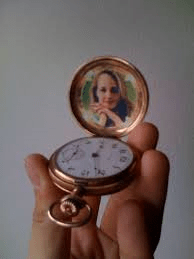
castaway pocket watch

“She was with me on that island.”

I advise new retirees to focus on applying tenured ambitions to ventures that nurture their meaning, not their ambition. Core skills can be applied with meaning to hobbies, charities, part-time employment and travel. People, too. I observe retirees live again by spending resources on grandchildren. They’re not buying electronics or clothes or toys either. They’re purchasing experiences.

Who and what will be with you on that island called retirement?

Confide in a listener. Chuck Noland’s confidante was a Wilson-brand volley ball aptly named Wilson. The smiling face on the surface formed from a bloody hand print. Wilson became a source of comfort, a way for Chuck to work through a survival and ostensibly a harrowing escape plan.

Retirees find great comfort sharing their emotional concerns and fears with others, especially through the first year. Spouses and close friends become anchor points. Human pocket watches. Financial advisors can add piece of mind by reviewing retirement plans and budgets with retirees on a regular basis. An objective voice that provides consistent validation that their plan will work is crucial.

I have witnessed some of the greatest emotional and creative discoveries from retirees in the beginning years as long as they share open dialogue with people who care to listen.

I have read magnificent works of fiction writing, observed great paintings and other inspired works from former accountants, attorneys and other hard-driving right brain individuals who didn’t appear to be artistic at all. And I’ve known many of them for over a decade.

Chuck Noland would have never made it off the island without Wilson. I’m convinced. There was a wall of thought and belief to climb before a makeshift raft with a portable toilet sail could be constructed strong enough to encounter the terrifying tides which bordered the island.

Who are your Wilsons?

castaway Three

Define and live your themes. In your past life there were goals. Whether hit or miss, you defined yourself by them.

So did Chuck in his FedEx life.

Goal setting will not enhance your retirement. Themes will.

Think about it: Accomplish a goal and you immediately set another. Enjoy it briefly and anguish over the next one. If you fail, you become discouraged. Goals are no-win for the creator. They are human hamster wheels.

At the conclusion of Castaway, Chuck Noland was not driven by goals. He was no longer the same person. A roadmap of Texas, sunroof open, donned in sunglasses, he was immersed in the freedom of the path. In the passenger seat a new volleyball and an unopened FedEx package he carried throughout his ordeal. On the surface of the weathered-worn box a pair of painted angel wings now faded.

There was one last delivery to be made before continuing a new adventure. Chuck finds and leaves the package at the address of the sender along with a note that the package kept him alive.

Chuck stops to study a map at a crossroad not far from the ranch house. An attractive woman in a pickup truck pulls up alongside him.

“Where you headed?” she asks.

“I was just about to figure that out.”

“Well, that’s 83 South. And this road here will hook you up with I40 East. Um, if you turn right, that’ll take you to Amarillo, Flagstaff, California. If you head back that direction, you’ll find a whole lotta nothin’ all the way to Canada.”

castaway four

As the truck pulls away, Chuck notices the wings painted on the back of her truck. Identical to the ones on the package.

He turns toward the road she’s traveling and smiles.

Retirement should be focus on roads you seek to travel. Each has meaning.

Every rock under the tires is an experience to feel.

Let the themes you wish to follow reveal their destinations.

There’s a new life in the gravel.

At a funeral a woman who recently retired asked me:

“What am I supposed to do in retirement?”

I said: “Follow what makes you human. Find what you lost. You had wings once, most likely when you were a child. Now use them to fly on the wind of themes you loved once and forgot. You know, before they were clipped by the daily grind.”

Some of the best advice I provide to retirees has little to do with money.

The woman took my business card. She called me.

“Are you sure you’re a financial advisor?”

Sometimes I wonder.
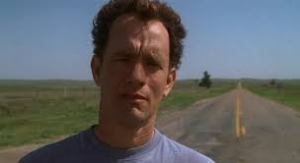
castaway two

Inflamed: The Red Stain Goes Deeper. 4 Steps To Resurface.

Richard M. Rosso, CFP's avatarRandom Thoughts of a Money Muse

“You gotta stay who you are, not who you were.

Places like this..

You have to put it away.”

What if you can’t?

“You have to.

Or it kills you.”

broken heart Here.

Rip open what’s been sealed tight and the past will bubble up on airy ringlets of regret. Pain grabs and fuses with it on the journey higher – they rise as one, gather momentum, and then explode into a fog of thick fear that absorbs you.

You’ll feel a boulder hit in the gut when this creature surfaces.

Everything you love or thought you loved will crumble. Ashes.

You don’t know it yet but you’re fighting a force you can’t beat.

But you’ll fight all the same.

And the stain begins to take hold.

blood spray

You hate every minute of its movement.

You feel the crawl. It’s cold.

Your initial response is to resist.

Resistance is an inflammation that…

View original post 1,314 more words