Emerged in Indigo – 5 Ways to Ride The Blue Spray to Better Mental Health.

“Yo, listen up, here’s a story. About a little guy that lives in the blue world. And all day and all night and everything he sees is just blue like him. Inside and outside. Blue his house with a blue rear window. And a blue corvette. And everything is blue for him. And hisself. And everybody around.”

Eiffel 65.

I woke up super early then. A teenage responsibility. To deliver New York’s “picture newspaper.” The Daily News. Sleeping residents would stir in a couple of hours expecting their papers. Along cement apartment grids. Ocean Parkway, Brooklyn.

It was one of the largest routes in the borough and I traveled it all on three-speed bicycle. I pulled a contraption rigged to handle 100 daily morning editions and the heaviest of Sunday’s news.

Before the sun was aware of its duty to Earth. Before the blue sky broke to orange. A first birth of light.

When the world was quiet. Stay quiet longer. A calm so loud it caused a ringing in the ears.

Not like this morning at 4.

News stations begin broadcasts at ungodly hours now. Roads are semi-clogged at 4 with volumes we once experienced two hours later.

I dislike how the world moves frenetic. So early. Stress. In the dark. Before the black dies to blue then blue surrenders to bursts of orange.

blue orange day

The world was simpler. Black to blue at a slower pace. Long ago you could enjoy the present. Appreciate atmospheric neon. Now – well, it’s different. 

Does it need to be?

world blue

Four in the morning was mostly test pattern territory in the 70s, accompanied by an awful buzz generated to scare the shit out of viewers and blow out mono-sound RCA television speakers.

What the hell was the significance of a test pattern anyway?
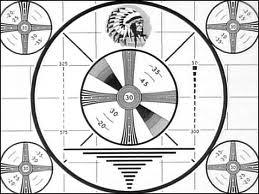
test pattern And what was with the Indian?

Seriously. Some young television producer seeking fame got lucky with a Spirograph and fooled a generation into thinking test patterns were something important. The noise that went along with them only added to the mystery. I always felt these test patterns were serious.

Like I needed to do something.

No sleep.

Seek shelter. That was it.

Evil was transmitted through black and white.

Through test patterns.

spirograph

Throughout decades, no matter who we are, where we’re from, colors have stained us. Monochrome, Technicolor. Some colors horrify. Others soothe. Many inspire. A few suffocate our spirit or maybe worse. Colors saturate memories, thoughts; alter our sense of smell, taste. Sex, lust, love, hate, anger, life, death, empathy, apathy – all just splashes of color.

Colors haunt us. Colors explode in our souls. Ignite brains, shut them down.

And once a color is attached to a thought, a moment, it’s impossible to change it. Although I’ve learned the shade can indeed, change.

The color that sticks, stays however. That’s the rule.

When I a kid. Really young, when my senses were newer and more alive, as early as five years old, the vibrancy of spectrums overwhelmed me.

In the spring, the smell of new grass glowed lime green – in summer, the aromas were windblown ribbons of yellow. Colors shaped the hours. Every day had its own color and every moment was a shade of that color.

Unfortunately, I had many gray days, too. And they puzzled me. It wasn’t until I was much older that I realized they were my depression days. Depression runs deep black in my family. Both sides.

Back to blue:

blue dude A blue one for the ladies. 

When I left the corporate cocoon (broke away, forced out, whatever) after 23 years, I lost my colors. My sense of security, sense of self, all I was. Gone. At least I thought. And after a colorless adventure physically, financially, mentally, I am beginning to not only see, but feel colors again.

As I lost the ability to live in the present, worried incessantly about my future, the blue evaporated from my spirit. I was able to recall, even as far back as five years ago, how I would stare at a blue sky and wonder what the color was. My blue was definitely closer to Prussian. Dark, heavy. I thought that was the way it was supposed to be.

Life was supposed to be well, colorless. I chalked it up to low T, a demanding, lifeless boss, a publicly-traded financial services company with draconian demands. So much out of my control. All of it designed to drain my blue. I see lots of blue-drained people now. They try to paint themselves true blue with new televisions, more toys, car payments. 

Long ago, I would close my eyes, before the paper route journey began for the day. When the air felt clean, before daybreak. I could freely bask in the present, breathe deep. I remembered that.

I was sad my blue disappeared.

Blue was my color of hope back then. A spray of Azure, I think.

And now it’s coming full circle.

Black is fading to blue. I see it now.

How can you ride the blue spray to sanity? To better mental health.

Random Thoughts:

1). Try. Hard. Try. Hard. Not. To. Lose. Your. Force. In the first place.  At the first sign of color loss, even a slight fade, step back and examine the origin. It’s a warning: The color of joy, hope, is fading from your soul, reducing your life force. Recognize and say no to people, ideas, fears that cause your positive colors to bleed light and your dark colors to deepen.

It’s not easy.

This year proved to me it’s tougher that I would have ever believed.

As I look to the past, now in the present, I observe the shifting wave of blue spray. It’s right there. Ready to wash over me. Hope is returning. The shade is different however; I’ll need to examine why as I move forward down the blue road.  Once I recall hope as Azure; today it feels more Brandeis.

2).  Surround Yourself with Spirits Who Share or Enhance your Color. Now that the spray is in my grasp, how do I contain it, bold it up? Move the spectrum to blue, or dark blue? I’m learning to surround myself with blue spirits. I’ve gotten so good I can see a blue glow around the right teachers. The blue spirits come in all forms – human, animal. Young, old. They’re awash in the spray.

I can pick up on the color of a prospective teacher in a few seconds. The “fade shaders” as I call them, or the color absorbers are immediately discarded. They are removed from my mental space. Their sprays are lethal and tough to lighten once they hit you. 

3). I Feel the Blue in Those Who Eliminate Big Debts. Recently, I met with a son of a client who just paid off $30,000 in credit card bills through a strategy we worked on together. When he told me he was released from the massive debt, I could feel his blue spray return. And it felt good. It enhanced my blue. The progress which allowed him to reach a financial life benchmark changed his world for the better. He was more hopeful, powerful. A bluer world for me too.

4). Blue Signifies Cool. Cool can cleanse, preserve, enlighten, awaken. It’s that first exhale of fall when the air is cool and your breath is warm. Deep breathing allows blue spray to wash over you.

5). Batman’s Cape was Blue.  As a kid I would run around the house with a blue towel safety-pinned around my neck. Blue was the color of hope and strength. It represented helping those who needed it the most.

Naturally, I ran into shit like a dumbass and once knocked our 12 inch black & white television off a poorly constructed aluminum stand. Helping those without asking for anything in return will deepen your blue spray, embolden consistency.

Blue is indeed honorable.

Good friends are Cobalt.

Your teachers, your mentors are Sapphire.

Your spirit once black, is ready to burst Electric Indigo.

In a colorless world.

Allow your blue to emerge.

And anticipate the orange.

Of your ever-emerging life force.

batman cape

The Dark Ride – The Shadows that Shackle and How to Release Them.

“It’s so damn hot in here. I can’t breathe!”

Like an August in West Texas. Hot in the far back of a tiny closet.

Behind a locked door.

The smell. A combination of mold, worn plastics, the acrid odor of mechanization, body sweat, and a dishwashing liquid drop-hint of semen.

The carny potpourri was too much. Even after thirty minutes. It felt like hours of suffocation. The lack of even the tiniest pin stream of light made the sickness worse.

I put aside my fear of shadows. They lived outside the “safe” boundary of the ripped seat that brought me to this point. I knew it. They thrived where light couldn’t.

Peaked over the edge of the two-seat car that took me into amusement hell.

And vomited hard.

Into the warm, dark shadows.

Within.

A Coney Island dark ride.

One of my scary favorites.

Until that Friday night in August. 1975.

When frolic reversed like a spook house car. Right to fright.

Stuck in Coney Island’s famous –

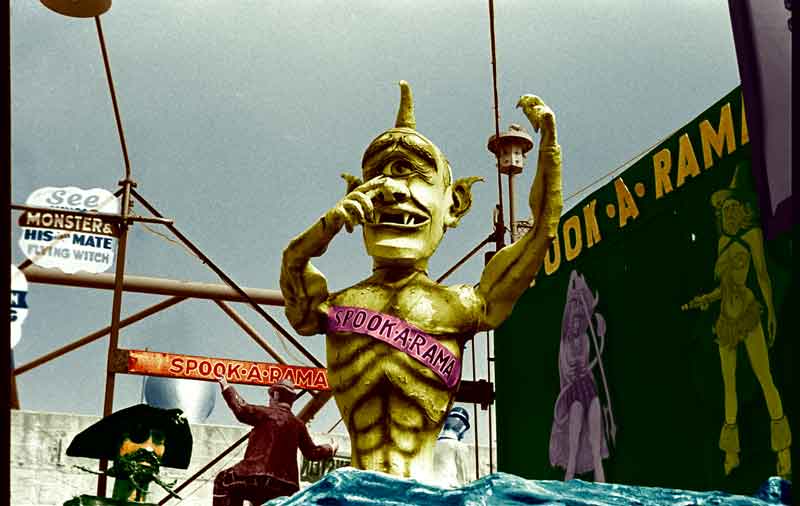
SPOOK-A-RAMA.

spook a rama four

It took months to gather the courage to enter the black place. The desolation of winter falling on outdoor attractions would find me wandering outside this haunt. I was drawn to the dark. The shadows inside. Even when locked for the off-season, I was on. In. The ride.

SpookaRama three

It was that damn cyclops with the six pack.

I would stare up at that face. Shudder. My eyelids frozen open. Eyes behind them seduced to stare. I wanted to be there. Part of it. The attraction to the attraction was unnatural.

That solo eye slid back and forth in a slow, stilted sweep.

In the winter. When the sky was quiet and gray and cracked dirty urban streets were empty of banter, I swore I could hear the mechanized creak of that eye.That left arm. It moved up and down at a deliberate “look at what I can do” pace. Loud too. A creep hand that held a severed head by dark, long strands.

And I couldn’t get enough.

It was that damn sexy witch with the curves.

She tempted. Seduced me to enter.

Assured me it would be fine whatever “it” was. Perhaps my sanity, my sense of self, my ability to stay alive. Whatever fine was, I wanted it.

I shouldn’t be afraid.

To open up.

Be myself.

She promised not to scare me.

That body. It tricked me.

And I was scared. And excited.

And so wanted to leap.

Then.

It happened.

Trapped in the dark.

Shadows all around me.

Too deep into the ride.

I  was angry.

And the shadows surrounded me. I was breathing them in. Absorbing them through pores exchanging Satan for sweat.  I could feel a dark-line slither circle my heart.

My body tingled cold in a hot mess.

All I feared, hated. All that ate me inside. Swirled around me. And I couldn’t move.

In the sun haze of day that went to night behind swinging doors. Real fast. 1975.

spook a rama doors

Today.

The dark ride track comes full circle.

And it’s black again.

The creeps have returned. With shackles. Iron boots. Lead, dead female faces.

spook a rama five

Random Thoughts:

1). What tempts you to enter the dark? Perhaps it’s the promise of light. Of love. Of sex. Of higher knowledge. Of a new bundt cake recipe. Who knows? The dark. Before it swallows you, is a seductress. It promises you what isn’t there. What was never there. Maybe it’s a bright battery of false beacons. Could be the only way to awaken from a darkmare is to get stuck in the middle of it in the first place? That’s it! You need to be trapped. Vomit deep. Purge the fear of what the dark brings with it. But first comes absorption. Attachment. Acceptance. Then – Clarity.

2). How do you disarm the shadows? Be open to them. Have souls around you intuitive enough to expose and destroy them. You’ll know who they are when they come to rescue you from that ride with the dank stench. The primal will to survive will draw you to the human lights you require. Be patient. It can take a long time but if you’re open. It. Will. Happen. Who are your teachers of the light? I have found four so far. They know who they are. I pray for more. I seek them now. I’m not tricked by the dark light anymore. But first was the pain. The fear. And the motivation to.

3).  Release the shackles. Be prepared. When shackles break, some part of you will too. Consider it a priceless donation to a higher power. As a warrior willing to enter and then exit the dark, you’ll need to bleed. Give up a piece of yourself to gain a greater peace of yourself.

4). Get the lead out. Carrying the weight of the past and future will leave you for dead in the dark ride.

spook a rama rat

The ego is a hungry, rabid rodent. Eating you. Picking at you. Until. You’re the Spook-A-Rama rat. Fully engaged in the present will trap the rat, save your face and show you the way out of the illusions of fear and anger.

5). In the light, the dark shadows appear campy. Funny. Harmless. Rotted. Lots of wires. Nothing real. Promises you made to the fear will die. The ties that bound you to false obligations of the past will break.

Best-selling author, shiner of the light, James Altucher wrote this to me today – The shadows aren’t real. They are playing out a story with you. A fiction.

Well. Isn’t that what a dark ride is? A short thrill? A fiction?

But it’s supposed to end.

You’re not supposed to get stuck inside.

The eye isn’t supposed to follow you forever.

spook a rama eye

Eventually, it rots. Breaks. Exposes itself as a silly amusement.

The stare releases your spirit.

Riches come.

They shine.

And the light goes on forever.

Thanks to those who rescue you.

From the dark ride.

Dedicated to Misti Mathis.

A Lil’ Plot of Planning – 5 Lessons For A Successful (Less Painful) Financial Road Map.

I wonder why financial planners don’t focus the majority of time on planning.

I’ve read the stats: Less than 40% of financial planners actually undertake the task of planning with clients.

Why?

Because it’s BORING.

There. I said it.

boring-marketing-content

Even those who seek financial planning and have a passion to document every facet of their lives relent to the mundane nature of the process. They start out excited and ostensibly find financial planning to be as riveting as multiple appointments with the dentist. A couple of clients equated the experience with sitting in the chair for a cleaning (at least it’s not root canal).

Ouch.

Boy, I felt terrific.

That was four years ago. I realized – Rich, you’re approaching this ALL WRONG. 

I needed to analyze: Step outside myself, my career choice. Ask tough, objective questions.

However, before making financial planning a worthwhile emotional experience I needed to face facts.

I asked a large sample what their first impression of financial planning was (is). Here’s the top three thoughts from those I interviewed:

First, financial planning feels overwhelming. Just the sound of it turns people off. It has financial in it. There’s planning in it. Right out of the gate I’m screwed.

Second, you’re just trying to sell me something. Personally, I know this is a valid concern. For many large financial services firms it’s is a “plan and switch.” My former employer was guilty of this and so are many others. It’s one of the main reasons I went independent.

An acquaintance of mine (not a certified financial planner) mentioned at his firm they create and then immediately shred plans for people they don’t talk to just to satisfy middle management’s need to show their office “produces financial plans.” It’s all about the check marks.

Third, the results made me feel more bad than good. So, if you save $3,000 a month for the next 20 years you may have a successful 25 years in retirement. Great. Frankly, it’s best to hope for an early death.

I remember reading a twitter post from a nationally recognized debt management expert regarding how “easy” it was for a middle class household to save $1,000 a month.

Really? On which planet? No wonder planners don’t want to plan and people dislike it!

crazy guy

 What’s with this 1,000 page planning questionnaire???

This is the reality of the planning experience for many. I dare you to deny it.

When I moved to Texas 14 years ago, I soon realized how important it was for Texans to “own land.” A place to call their own. Can’t explain. It’s beyond the American Dream of owning a house. Texans respect their plot of land. Cherish it. Regardless of size. Their plot is their own. It doesn’t need to be expansive. Just theirs.

Got me thinking again as Texans always teach me lessons. How can I use this mindset to help others create a less painful financial road map and perhaps enjoy the process? OK, tolerate the process.

How can you be more successful and empowered by financial planning? It does help to know where you are and the probabilities of where you could wind up. No, really!!!

1). Examine your own foundation first. Before you even think about investigating the services of a certified financial planner (and I would stick to a certified financial planner professional), face the facts about the basic elements of the piers and beams or slabs that support your financial structure.

If you’re a poor saver, rack up debt, borrow money and don’t pay it back, frankly I can’t help you much. Sure, I can give you some constructive principles, ideas to improve, but unless you are willing to make the efforts to get your foundation in order, there’s nothing I can do.

Don’t waste your time with a financial planner like me. Frankly, the entire experience will make us both feel bad. Oh, and no: I don’t know what the next Apple stock is going to be to make you 1,000% on your money. Taking more risk on investments is not a smart way to fix a foundation.

2). How solid is your structure? I observe how Texans leave weathered, dilapidated barns on their property. Not sure why. The weather conditions are unpredictable here. I guess it’s a losing battle. Let nature take its course.

It takes much time and attention to make sure structures remain strong in the face of oppressive heat and brutal, abrupt changes to weather conditions. For you, making sure to have plenty of cash to weather financial emergencies or withdrawals, is crucial.

With the poor current state of employment, I suggest 6-9 months of living expenses in a savings or money market account.

Texas barn

Even retirees can benefit from a cash reserve when taking distributions. That’s what I advise. I’m glad empirical analysis proves my method, correct.

Read on:

The Benefits of a Cash Reserve Strategy in Retirement Distribution Planning.

From the study:

The empirical findings of this study are clear. In a taxable environment with transaction costs and lower investment returns than seen historically, liquidity improves plan survival rates relative to a strategy with no cash reserve. The reduction in taxes, transaction costs, and the detrimental impact of volatility on wealth more than offset the opportunity cost of lower returns due to allocating more wealth at retirement to cash.

3). Inspect your financial planner. Inspections, appraisals are important elements of purchasing, selling real estate in Texas. Thoroughly inspect your planner before the planning process.

For example – Ask the right questions. Like – How do you get paid for this plan? If the plan is free – Run. You want a person who charges a fee per plan or hour. A “free” plan is far from free and most likely, will not be a priority for the planner unless you make a life insurance purchase or go into a managed money product. Investment planning is as important, not MORE important than the other elements of your financial life.

Inspect to make sure your certified financial planner is in good standing – http://www.cfp.net.

4). Get organized first. Build a fence around the paper. Sounds simple enough, yes? How organized are your financial documents? – Tax returns, brokerage statements, deeds, estate plans. And what about all those passwords for financial websites? Are they documented and stored in a place for heirs to access? Organization is control.

It’s a good exercise to touch, read, file your paperwork. A great first step to easier planning. Perhaps your financial planner can help? I provide hefty, heavy-duty binders with tabs so clients may get organized before planning can begin.

5). Think small. In Luling,Texas there’s a place called Tiny Texas Houses. Brad Kittel a master builder, creator of livable art from salvageable materials, has made small sexy and functional.

brad_kittel-4-2011-300x168 Hi Brad!

Why must you complete a financial plan the size of Proust’s In Search of Lost Time at 4,211 pages for it to be taken seriously?

Go modular. Small. One personal financial benchmark at a time. Then move on to the next financial concern/goal. A good financial planner will help you savor the process one element at a time and create a checklist to keep you moving forward.

Planning isn’t entertaining.

It can be rewarding.

As planners we need to face the fact: We’re not popular but we are necessary.

How can we find ways to make it all more enjoyable?

I’m too old to go into dentistry.

How about you?

dentist This looks fun!

4 Lessons From Dead Muses – Keep Your Cool, Keep Your Money.

I find stock market history fascinating. It’s a sickness. I know many in the financial services industry suffer from the same affliction so this isn’t a shocker.

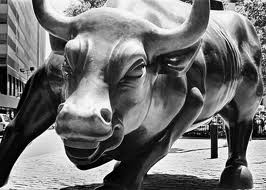
wall street bull

I shake my head as we seek to match up current market behavior to years past. It’s 1937. No, it’s 1987. Frankly, current markets are comprised of multiple personalities of decades of market history so I find the exercise beneficial.

The study allows me to be less of a deer in the headlines through market cycles and provide clear, concise guidance to clients. It allows me to say confidently – “This time is NOT that different.” Sure, it feels different to you because you haven’t lived through a similar cycle – Investors before you have gone through this. Something like it.

Or worse.

We always seek to find patterns. In everything. It makes us feel smarter. Finding (or creating) patterns creates an illusion of control. I guess when humans were hunting for food, uncovering patterns was the way to find a food source (and avoid becoming a hearty meal). With investing, becoming too overconfident in a perceived trend can lose you money.

What stands out throughout my detective work, is the predictability of our emotional behavior when facing investment decisions. The same mistakes are made, repeatedly.

Did you know that most retail investors lost money during the greatest stock bull market in history? Seriously. How? Oh, by getting in to the markets late in the cycle – only to suffer great losses from the tech bubble in 2000.

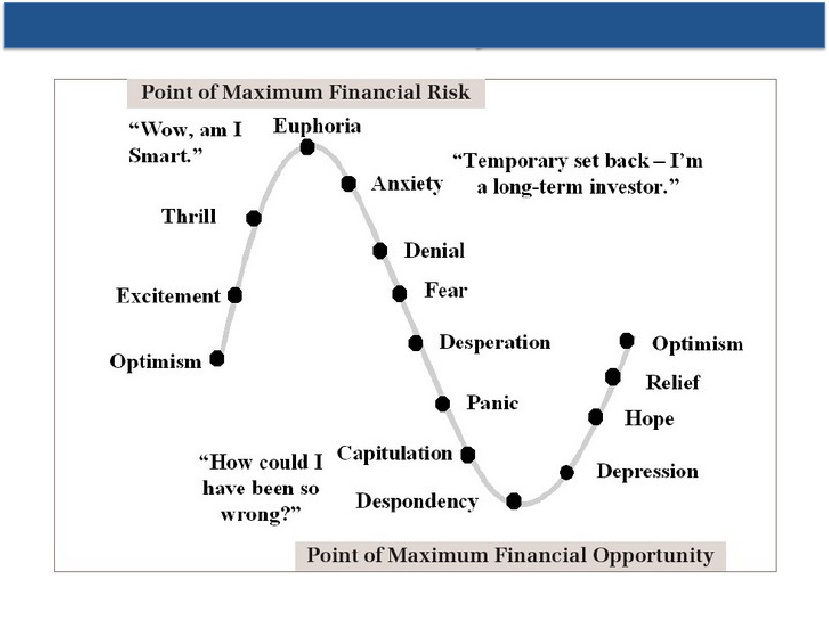
sentiment cycle

Investors commit capital at Euphoria, Thrill, Excitement, even though they claim to seek “value.” Let’s face it – we are addicts to chasing performance. There’s enough household financial carnage to prove the fact. You can’t time market entry/exit perfectly, however many investors bailed out big time at the market bottom in March 2009 – specifically at the Point of Maximum Financial Opportunity.

Smarter investors had the common sense to avoid an “all or none” decision. In other words, they didn’t sell out of stocks completely, they just buffered their portfolios by raising more cash to weather the storm yet they remained invested and took advantage of the market’s cyclical bull now going on five years.

 As I prepare my second book on lessons from Wall Street sages long dead, I came across a first edition of a classic from 1896 titled “Ten Years In Wall Street” by William Worthington Fowler. 

A section “How To Make Money In Stocks” outlines common mistakes of the “Wall Street Operator.” The lessons are worth repeating and stand the test of time. Not surprising we are making the same mistakes over 100 years later! I’ll list them straight from the mouth of the dead along with ways to avoid these mistakes.

1). Time fights on the side of the man who buys stock at a fair price and pays for it, inasmuch as the material interests of our country are steadily advancing. Owning companies at attractive or cheap price levels based on fundamentals and paying cash, not  margin, places greater odds of success on your side. Time. Let’s just say for those who can hold a stock position longer than a week.

Currently, sentiment wins out over valuation. No matter what I examine – a Gordon growth model, CAPE, Q-Ratio: Stocks aren’t cheap.

In the long run, valuations using historical earnings determine returns. However it can take years for these long-term valuation metrics to adjust stock prices accordingly. Be selective at this juncture. Do your homework. There aren’t many bargains out there right now.

2). The man who can keep his position in spite of the temporary condition of prices, is the man who, in the end, wins. I’ll add – If you pay a fundamentally sound price. So, if I paid a good price for the risk taken, the short-term gyration of that price is not going to shake me out of a position. I may even use a dip to purchase additional shares.

For example, I purchased additional shares of Boeing (BA) for several allocations in mid-July when sentiment turned negative which turned out to be good strategy.

3). The frequency of operations is another fruitful cause of losses. Frequent trading for most, is an unsuccessful venture. Brad M. Barber from the University of California, Davis and Terry Odean finance professor out of Berkeley conducted a study of active traders back in 2000 which still proves timeless.

Individual investors who hold common stocks directly pay a tremendous performance penalty for active trading. Of 66,465 households with accounts at a large discount broker during 1991 to 1996, those that traded most earned an annual return of 11.4 percent, while the market returned 17.9 percent. The average household earned an annual return of 16.4 percent, tilted its common stock investment toward high-beta, small, value stocks, and turned over 75 percent of its portfolio annually. Overconfidence can explain high trading levels and the resulting poor performance of individual investors. Our central message is that trading is hazardous to your wealth.

Trading is Hazardous to Your Wealth.

If you’re compelled to trade actively, isolate a small portion of your cash in a separate account designated solely for trading. I have nothing against trading especially if you can use it to gain knowledge about stocks.

You need to do your homework and study technical analysis. One of the best books to read is “Technical Analysis for Dummies,” available on Amazon.

3). The practice of selling stocks short will be found, in the end, to be invariably a losing business. Decent short sellers make headlines. Professionals can hold out longer when they’re on the wrong side of the trade. Most of the population should stay away from this hot mess. You can’t win. I wouldn’t bother with it. Want to protect your portfolio? Increase cash.

4). Cut short your losses and let your profits run. Most investors do the opposite. They’ll hold on to losers “hoping” they’ll come back and sell winners too soon. Keep in mind the dog doesn’t always return home. It’s better to face the fact and move on.

Since we hate losses twice as much as we appreciate gains, I understand the burning desire to get even. It’s a losing strategy. Before you purchase a stock, have a sell discipline in place.

I use negative changes to cash flows, operating margins, a breakdown in the charts to alert me to a possible sell candidate.

Dead sages are great muses.

Old lessons remain good lessons.

They’ve made the mistakes first.

Learn from them.

When Organs Go Wrong – 5 Ways to Get Them Right Again.

I stare at red life fluid in the toilet these days. Not a comforting condition.

The act of urination is a vice grip on what remains of a right kidney.

As I contemplate how I got here – One day you’re healthy, the next you’re compromised,  I begin to understand how the deepest fears, sorrows, insecurities can manifest themselves until a part inside your body breaks. An organ goes wrong.

I hold a new respect for the power of the mind to target internals for disposal.

For me  the mental triggers were (are) a relentless former employer attempting to break me financially, a broken friendship, and a breaking new business venture all hitting at once.

Lots of breaking. Broken.

An e-mail arrived.

In the early morning. The day of my surgery.

The Metaphysical Functionality of the Kidneys.

How timely.

Several eye-openers for me. Was it a coincidence that I received this e-mail?

Not a big believer in coincidence.

As I read through, I knew the information was right. I received this e-mail in the morning of my surgery for a reason. I checked my spam folder (which I rarely do) because it was supposed to happen.

Indeed – there are no coincidences.

  • The Kidneys are the fundamental cornerstones for the energies of the Yang and Yin. They are the organs that allow us to anchor the energies of  Xing (Zhi) or Jing, the congenital essence  inherited  from our parents, which determine our constitution, our strength and vitality, and are responsible for our growth and development, and how we process aging. Well this says it all – the congenital essence from my parents can occasionally undermine my constitution, strength and vitality. The freak right kidney represents the congenital worst of mom and dad.
  • Zhi is the spiritual energy of the Kidneys, is the hereditary memory or imprint of your past life and the ancestral energy of human beings, which records who we are and where we come from. It is the reservoir of life energy. The spiritual name of the Kidneys, Yuying , literally meaning “rear a baby”, emphasizes that the kidney organ system is related to the origin of our life. Through this trying period, I probably went to the kidney reservoir for life energy one too many times until the right one committed organ suicide.
  • The weakness of this organ can be manifested by individuals that are controlled by their fears, which can damage their motivation and their will; slowing their thought process, and generating the tendency of getting stuck in various life situational challenges. Holy shit, was I, am I stuck  in challenges and facing fears at this time. For a period of time, roughly three weeks, I barely ate and was severely dehydrated. I was in shock. I dropped 15 pounds.
  • It is believed that just one of the Kidneys do the heavy work for the purification of the body, while the other one  concentrates its functionality on  keeping the lightness of the spiritual life and the sustenance of the other bodies. There you go, I was in deep darkness and discarded my spiritual life force. 
  • Metaphysically the Kidneys can crystallize the criticism disappointed and failures. They are intimately related to fear, low self-esteem, insecurities, and apathy for the present moment, isolation and indifference. I experienced all of this, all at once and hard. It was concentrated on my right kidney like a mental laser which destroyed its function. 

Random Thoughts:

1). Understand how fear and insecurities can cause real damage. Some of my worst fears have not been realized even though I tormented myself with outcomes which had not occurred. They weren’t real. My mind, ego created false panic. It sparked a weak link in my body to snap. When in a fearful moment, it’s important to become incredibly aware of what’s happening in the present. Step away. Most important is to understand the panic you create is not happening in the now. It’s a blueprint of a false future.

2). Stop the bleeding. You may have caused irreparable harm. Cauterize it. Make sure the condition doesn’t get worse. Following a healthier diet, taking a  physical workout to the next level can help you maintain so the situation you’re in doesn’t worsen. Your condition may improve.

3). Disarm the anger. It was tough but I learned to completely release the anger created by the busted friendship. I still hold anger against the former employer but have channeled  it to create a tactic designed to turn the tables on their insidious motives. If you must be angry, think clear and direct the heat toward intelligent tactics that will burn its source.

4). Good money habits create less stress. If you’re living from paycheck to paycheck or beyond your means, there’s no doubt you’ll suffer. Working toward financial security creates feelings of well being thus reducing stress.

5). Watch your words. Your words will inspire thoughts. Those thoughts may result in an organ uprising. For a time, I felt that life wasn’t worth living and was hoping for a terminal situation to take me away. Looking back,  I realize how stupid and silly I was. Use positive words. Use words that display control – I seek to, I command myself, it’s in my control to change what I dislike.

As grandma told me repeatedly – “Don’t talk yourself stupid.”

grandma scolding

Positive self talk – I’m fortunate enough to have one working kidney. I will respect its function.

I knew there would be damage because I created it.

I just didn’t know when or where.

In an early morning, before surgery, I decided to check my spam folder. Out of nowhere.

No reason.

It turned out to be a blessing.

One day I’ll look down.

The water will be free of blood.

And I’ll know I’ve come a long way.

And I’ll be strong enough to work farther down the road.

In the clear.

The Black Hole of Retirement – 6 Tips to Light the Way Out.

Why must the retirement planning process end with retirement?

As advisers/planners we become immersed in the process; there’s nothing better than assisting clients map out financial strategies which lead to successful conclusions.

Then what?

black hole The first year of retirement can be scary.

There exists a level of anxiety for new retirees even though we as professionals feel a sense of accomplishment. Years ago I discounted this discomfort as “crossover risk.” Clients who told me they were going to “retire,” were back at work a year later and the opposite occurred too.

Eventually, crossover risk lessens. However, the first year of retirement, the bridge, has become increasingly stressful. Enough to where I now call the first year:

“The Black Hole.”

It’s a place we rarely want to venture because it reaches dark deep into the vulnerability, misgivings, guilt (yes guilt) first-year retirees experience. And in a way, as consultants, we are uncomfortable to secure ropes around our waists, jump in to the holes and pull the clients out because generally we work with numbers, not feelings.

Out of respect, we allow new retirees the “space” to figure it out and ostensibly they do. There’s light at the end of the tunnel (hole), eventually. The adjustment is complete.

But is this a strategy? Not really. So if you’re in the dark as a retiree, or a financial professional who is aware of the dissonance in clients, what can you do to help?

Six points of light:

1). Listen. Hard. For queues of uncertainty and opportunities to provide reassurance. Don’t skirt or discount the uneasiness. Oh, you’ll know the queues, the words that will cause you as a retiree or a professional to squirm in your seat.

If you actively listen, you’ll become sensitive to the frustration or apprehension of working out of the black hole. And there’s a lot going on in the dark – It’s a realization of one’s mortality, a challenge to an inner sense of worth; some experience guilt because they’re no longer feeling like productive members of society.

No more deadlines, phone calls to put out fires. I’ve noticed men have a tougher time working through the first retirement year. As one client shared – “I still need the fires.”

fire dude Burn me, baby. Burn!

2). Provide Reassurance. It can be as easy as a brief review. A focus back on the highlights of the written retirement plan. Your advisor said you’re gonna be fine. All the numbers work. As a financial professional, a positive focus can increase confidence and provide comfort.

3). Ask Questions. Don’t be afraid to ask yourself or introduce questions that kindle new fires. The right questions can ignite thought, reflection and set a person off on a smoother transition.

How would you apply your work skills to a new venture? What motivates you to wake up in the morning? What adventures have you always wanted to pursue? The more you ask, the more comfortable you’ll be with the communication dynamics which will flourish.

4). Be Sensitive. To input from a spouse or partner. There’s nothing better when someone who is close to a new retiree can vocalize observations and/or ideas. You may pick up on frustration as this is a transition for others too.

As a spouse lamented “I didn’t know I was going to be dragged into the black hole, too!” A partner can be a motivator and provide valuable insight for an advisor. Recently, I asked a working spouse for ideas on how I can help her husband work through the unease of retirement and she was happy to flood me with suggestions.

5). Think Homework. I know it’s painfully clichéd but a bucket list activity is not a bad idea. One client told me a bucket (literally) was on his bucket list as he had an idea to turn buckets into painted art work. Give yourself or give gifts (as an advisor) of knowledge like books and magazines that focus on hobbies and other pursuits.

6). Get Social. Treat work associates to lunch; gather regularly with former colleagues, associate with company retirees. The sense of community is still important as we’re deep inside, social animals. As a financial partner I’m happy to spend time with new retirees in casual settings, engage in conversations to light a path out of the black hole.

So who said retirement was supposed to be easy?

The first year, the one mile out of the comfort zone of once was, can be incredibly stressful.

But with a little self-help and assistance from others.

There’s a way out of the darkness.

The Conversation Startlers –5 Ways to Startle The Parents into a Estate Planning Conversation.

My father was horrible with money.

Mine and his.

Grandfather (on my mother’s side), worked six days a week stocking shelves in a downtown New York City grocery store. Thirty years – Twelve hours a day.

When he died in 1969, Joe (Giuseppe) Zappello, a frail man who lived above an ethnic grocery, saved $10,000 – a life’s effort, which he instructed be used for my college education.

Dad spent my inheritance on a new 1969 blue Mercury Cougar with white leather interior. Admittedly, it was a beauty. I still remember that car like it was yesterday.

In pristine condition, the classic commands about $30,000, which looking back, may have been a better “investment” than my college education.

cougar interior

Dad saved once in his life. Just in time for my manager at a penny stock firm to put the entire ef­fort in jeopardy by liquidating all his quality stock positions (without my knowledge) and purchasing worthless securities for a hefty commission. Great.

Dad was part of the working poor and deprived of even the littlest of luxuries as a kid; my grandfather was emotionally freezing cold and my grandmother was the entrepreneur and breadwinner for the most part (very odd in the good old days), so except for his maternal grandmother, dad didn’t receive much attention to compensate for the lack of material goods.

Even when I tried to approach the subject of money with him in 1991 he dismissed my questions as if I was the village idiot even though strangely enough, he allowed me to invest for him.

You never questioned elders about financial matters in my family or dug into the reasoning behind money decisions.

Discussing finances with family, especially parents is difficult and awkward. Conversation starters are tough. It’s important to have them however, as bad decisions or no decisions by parents, will leave you, the kids, the family, in a dilemma later.

Here are five “fire” conversation starters that will help. They’re controversial.  I’ve used them successfully.

1). When you die can I please have that diamond necklace grandma left you?

Replace “diamond necklace” with any heirloom you want. Deliver the line and shut up.
I would soften the impact with a couple of glasses of shared wine beforehand. Coming
across as a selfish ass on purpose is tough. The goal is to jolt your parents to a response which can lead to a discussion about proper will and legacy planning.

2). What do you think I should do if I told you I had a month to live?

Here, you’re asking the parents for guidance. What a way to make the parents go mushy inside.  Lower the defenses.

“Not my baby!”

not my baby

If they start going on about how you should have a bucket list – blah, blah, blah, make sure to steer the conversation back to them. Segue to asking the parents how they’ve prepared. It’s a long way around the subject but ultimately you’ll get where you need to be. I’m sorry.

3). What do you wish you would have said to or asked granddad (grandma) before they died?

Gee, I wish they would have told me where all their important documents were kept so
I didn’t need to ransack the house at the worst time? I deal with clients who
lost parents a decade ago and abandoned investment and banking dollars are still surfacing.

4). Do you realize if you die tomorrow I have no idea whether you want to be cremated or buried?

We’re planning a coin toss but you won’t care because you’re dead. Even parents who laments “Oh don’t fret over me, I don’t care what you do, I’ll be dead,” are full of it.

They do care!

It’s their responsibility to provide instructions for others to follow. This should NOT be your decision.

5). How do you think Snowy would feel if she was whisked off to an animal shelter if you died?

I don’t mean to throw the pet in the line of fire however it’s an effective ice breaker. We
love our pets and can’t imagine the horror of poor Puffy carted away after we die. I’m a passionate animal person.

I’ve experienced, more often than I prefer, owners not communicating intentions for pets. Like those left behind are supposed to assume. Placing Trixie strategically into an estate conversation can break down walls, allow information to flow.

Communicate with your children & loved ones about money. Share your successes and failures. They shouldn’t feel threatened to ask about your financial situation.

If grown kids inquire about your estate planning answer them. Help them understand your intentions.

Don’t make loved ones feel questions about money are “off limits,” or “unacceptable.”

Cater these “startlers” to your situation. Parents will remember your frankness, your sense of humor.

Occasionally, shock and awe works.

Next: How to use a third party to facilitate the conversation.

10 Life Lessons from a Grandma – Today is Everyday.

Lord knows nana Nellie wasn’t a looker.

At 40 she looked 70. She was always old.

Nana was the “custodian.” at my Brooklyn, New York public school.

Custodian: Fancy word for janitor.

It embarrassed me how she cleaned toilets.

I would look to avoid her in the halls.

As I get older, I realize the impression she made on me. 

Grandma’s life lessons.

Random Thoughts:

1). Screw Stereotypes – Nana loved people for who they were, not their appearances. She would provide food to families at the school who were having difficult financial times and hold fundraisers for the less fortunate. And she was one of the less fortunate.

2). Be Nurturing to Children – Nellie would dress as Santa every year, walk down  school halls and hand out pounds of candy to the kids. They loved her. I was so embarrassed. Odd. Imagine someone dressed as Santa delivering candy at a public school today? That is grounds for dismissal or perhaps – arrest.

3). Be Proud of Who You Are – Nana was nana. She dressed like crap but had a heart of gold. She would wear this hideous battleship gray and white school uniform that made her appear more matronly than she really was. I rarely saw her dress stylishly. And people could care less. Neither did she.

4). Make a Killer BLT – Nana was a good cook but her BLTs were something to die for. I know her secret to a mind-blowing BLT sandwich and will take it to the grave.

5). Smile & Say Hello – Nellie’s bedroom window faced a busy street. One of her favorite pastimes was to sit there and watch the people go by. She always would call out a hearty hello and smile. Even when people didn’t return the courtesy.

6). Save, Save, Save – Grandma was a Depression baby. Nothing went to waste. She wasn’t a hoarder, but found a use for everything. My grandfather abhorred how she would have him pull over because she would notice a salvageable treasure in a neighbor’s garbage, out by the curb. One year she found the coolest red wooden Santa’s sleigh complete with ornate wooden carved reindeer. We dragged it ten blocks to her house.

7). Forgive Your Kids – My dad was always out with some hot girl two decades younger than him. He would tell grandma he was coming by and not show. Or he would cancel on her for a hot date. She would shake her head and say “that’s my Benny!” smile and move on. She told me once – “you can’t control what others do. Only what you do.”

8). Encourage – Grandma was always telling me I could do what I want. I was smart enough. I could attend college. She had owned multiple businesses in the 1950s – A laundromat, a delicatessen. It was rare then for a woman to take the bull by the horns. I think unfortunately, grandpa killed her spirit so she relented a bit and gave up the businesses.

9). Be a Good Friend – Nellie was loyal and loved her friends. And she had many.  She was there to listen, support, engage.

10. Today is Everyday – I believe this was nana’s shot at philosophy. She wasn’t educated, yet she was wise. This life lesson is still the most challenging for me – If I talked about my future or I was frustrated by my situation Nellie would advise me to make the best of it, learn from the experience.

Then give me a hug.

And a BLT.

On occasion, a hug, a sandwich (made with love) and a memory is all you need.

To get by.

To make it through the school of life.

BLT

The First Meeting with a Financial Adviser – 5 Signs to Cut and Run.

It’s frustrating, time consuming and intimidating to find the perfect financial professional.

It’s the first meeting (finally).

What signs should raise the hairs on the back of your neck?

hair back of nneck

First hair: Products are discussed. How can an adviser discuss products when they have no idea of your situation? The initial meeting is one of inquiry and discovery, not solution or product. It’s fine if you have a product-based question, other than that? No.

Second hair: Too talky. You are seeking an inquisitive, active listener. Not a talker. You should be doing most of the jaw boning, not your prospective adviser.

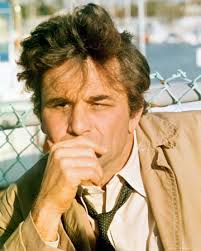
Third hair: Not enough questions. A good adviser is like Columbo in less-wrinkled clothing. Keep a detective’s eye out for open-ended questions which allow you to tell your story and share concerns.

columbo one Heck, if it’s a good adviser, forgive a messy tie.

Fourth hair: Limited eye contact. A new client recently told me about her interview experiences. “He appeared in a hurry, like we were cutting into his lunch. He didn’t look us in the eyes. He wasn’t engaged. He kept peeking at his watch.” Enough said.

Fifth hair: Not enough experience. Ok, experience isn’t everything. Advisers can get “stale.” Some stop learning because they’re used to doing things “their way.” Hey, financial services is an ever-changing business and your future financial partner better be up for the job.

Experience is important. You don’t want an adviser who gets spooked by bear markets or volatility. However, you must make sure a “seasoned” professional finds value in keeping current and has a passion for ongoing knowledge.

Take notes. It’s an interview. Ask for clarification on key topics discussed.

Remember – it’s your money.

You’re in control.

There are great advisers out there.

It’s only a matter of time before you find the right one.

heart Aw. Just aw.

How to Free Your Mind – 4 Lessons From Observing Psycho Mom.

It’s no secret. My mother wasn’t “all there.” Heck – is your mother?

Odds aren’t in your favor. Perhaps it’s heuristics (which are very personal) but I’ve noticed that mothers (females) seem to be real good at torturing those around them.

Maybe it was hormones. Genetics. Perhaps it was my dad, or me, who drove her over the edge. Most likely we were key ingredients for her insanity soup.  She had a good heart. A great heart. I never forget that.

I think she cared too much, was too sensitive, definitely too horny. She was prone to addictions. With all the tribulations we went through, I never doubted she loved me; her shit just got in the way.

Her mind, her thoughts were her worst enemies.

Mom did teach (mostly through mistakes). Some of her bad habits are my own. I’ve learned to detect them, analyze and eradicate (mostly) with a cold, objective eye.

Even as a kid, I’d watch her steam head-on into a train wreck. Instead of helping I would sit back and take notes. It felt safer.

Hell, I’m not Superman. I can’t stand in front of a locomotive and stop it. That’s how you die.

superman stops a train

So, what did she teach me? What can all mothers teach us?

Random Thoughts:

1). People Are Going to Hurt You. Be prepared. It’s what I call the “yellow sticky.” People create stains you can’t wash away, only fade. Humans are a constant source of disappointment. I’ve learned to begin each relationship with a new, crisp mental white sheet. I leave room for the stain to occur, because there’s a beauty to it. Each stain makes you wiser, more empathetic, interesting, engaging, experienced, open, vulnerable. Unlike mom, you can’t take human relations too seriously or the stains will never fade. Learn to see the comedy in each relationship. It’s there.

yellow sheets  You create yellow sticky.

2). People Are Going to Surprise You. At age 16 (and at her sweet 16 party, great timing) my mother found out her mother wasn’t dead. She was insane and under sedation at a Long Island sanatorium. Surprise!! Not all surprises are going to be be BAD. Give others the benefit of the doubt and you may positively surprised. Or not. Like mom. Yikes.

3). Perfection is a Fool’s Game. Mom always felt she was never “perfect” enough. Her breasts were too small, she was too dumb, her hair wasn’t right. Exhausting. Appreciating imperfection is the way to form lasting bonds with others. After awhile, you’ll see the perfection in imperfection. Your mind will be at ease. Those who believe they’re perfect stop learning, growing, thriving. Step back. You’ve seen it.

4). Bad Habits are Expensive. Mom was a lifelong chain smoker. A major contributor to her early death. You notice the price of a carton of cigarettes? How much are you spending daily on bad habits? How much will your bad habits cost you financially, in the future? Hundreds of thousands of dollars. I’m not doing the math. You know this fact already. 

I learned to love mom’s imperfections, deal with her hurt, shake my head at her surprises, stayed away from her bad habits (I never smoked, tried drugs) and feel sorry for her need to be perfect.

What is your psycho mom teaching you?

psych mom