The Five Money Mishaps of Newly-Divorced Couples.

Featured

A variation of this writing appeared on http://www.nasdaq.com.

Money is blood.

blood money

My grandfather would lob sentences like this at me all the time.

Then walk away leaving me confused.

I never forgot this one; I have a clearer understanding of what he meant. At the time, I thought he was silly.

Heck, I was in first grade. What do you expect?

The people most successful at managing finances detect, understand and respect how strong feelings and on occasion, irrational thoughts, affect their net worth.

Emotions flow deep and dark like the ink in cash. Don’t kid yourself about it.

Money has the potential to become “emotions squared” during and after a separation or divorce.

emoitional money

Decision-making fueled by vulnerability, can weaken financial foundations. Nobody’s immune.  Unclear thinking followed by poor short-term actions has the potential to wreak years of financial havoc just at a time when you need to be most diligent with debt, spending and savings.

I’ve counseled people through money mishaps; I’ve witnessed even the most level-headed individuals make numerous money mistakes through this tumultuous time.

So how do you do your best to avoid the top money mistakes I’ve witnessed over the last 27 years?

Random Thoughts:

Watch vanity expenses. From expensive plastic surgery to lavish trips and wallet-busting new wardrobes, people have a tendency to spend impulsively and deal with the mounting debt later. Restraint is lost and stuff becomes salve for ailing pride. An attitude of “I deserve this: I’m working through a tough time,” has the potential to override common fiscal sense. Before blowing up credit card debt, consider a “FGS” exercise – (Feel-Good Spending) Exercise!

Start a wish list. Boundaries don’t exist when it comes to feel-good wishes. What will it take financially to enhance your handsome, pretty, smart, and your self-esteem?

Total the expenses required to turn desires into reality. Now, cut the sum in half. Next, categorize items from the least to most expensive. Splurge on the first two. This exercise will help you think through each purchase ostensibly minimizing emotional reaction. Also, crossing off a couple of the items can foster a positive feelings which may be enough to halt further spending on the more expensive items.

Rein in the ego dollars. I’ve seen it many times, especially with newly-divorced men. They’ll shower expensive gifts, dinners and excursions on (mostly younger) members of the opposite sex to impress and feed their bruised egos.

I’ve witnessed the spending border on reckless so much that I have helped ego spenders create “sugar-momma” and “sugar-daddy” budgets. Having an objective, non-judgmental discussion with a trusted financial partner about these expenditures can help avoid financial pitfalls and rein in the ego dollars.

For example, a gentleman asked me my thoughts about his new girlfriend’s request for $10,000 for cosmetic dentistry. We both talked through providing $2,000 (still a lot but an improvement), for a less expensive option. Unfortunately, she was upset by the offering and moved on; fortunately, a hefty financial mistake was avoided and a lesson gained.

Don’t allow anger to cost you big bucks in the long term.  On occasion, separating parties are so blinded by anger they fail to comprehend how it can truly cost them. I worked with a couple who decided to split amicably.

They came in to discuss the impact of divorce on their finances which was minimal due in part to reasonable legal costs – less than $7,000, until a fight erupted over who would be primarily responsible for the family dog. The attorneys involved created additional doubts which made the situation worse. Now this once amicable, reasonable couple have spent $37,000 in legal fees with no resolution in sight. I explained they could have worked out a plan and just split the $30,000, keeping the assets for their own balance sheets, not the lawyers.

Seek perspective on every expense greater than $200. Yes, you’re an adult. However, you’re an adult with much on your mind and about to face a big life transition. The perspective is primarily about keeping one foot outside of the situation and gathering feedback from a trusted friend or financial partner. Think of it as validation for keeping a level head about spending and a good habit to consider in the early stages of a breakup. It’s also a potential confidence builder, a foundation to rebuilding self-esteem if your thought processes and expenses are validated by a confidante.

Take a full accounting of all assets and liabilities. What’s fair is fair: Make sure you receive what is due. Party members will occasionally bend over backwards to relinquish assets or overlook a full accounting based on the faith that conflicts will work out and ultimately reconciliation. Hope is one thing. Protection is another.

In good faith, a couple should be transparent with all assets and liabilities. Also, each person should prepare an “impact” budget to determine new lifestyle costs. It’s a vision of your household expenses post-divorce or separation.

A second income could be lost – that’s an impact. You may require greater childcare expenses if you’re a working adult with custody. Perhaps a smaller residence is required and you’re renting now, which can affect deductions. How will your tax situation be affected? Is there alimony or child support – how long will it last? Good questions for professionals. Best to envision what’s to come and begin a budgeting exercise.

Divorce is never easy. In the early stage, there’s a raw, emotional cord that can vibrate and throw off your financial footing.

It’s best to step back and recognize possible mental pitfalls early on.

divorce money


The RoboWars Begin – Nash vs. Bettinger: The Winner? You.

Featured

Once upon a time, (allegedly), there was a dude named Moses who delivered chosen people from a horrific situation. Important man. Very Popular. Scruffy. Like Rick Grimes (Google if you must).

Beards are in, people.

rick grimes beard

Then there was God, a prolific writer with his finger (imagine) who decides (who’s gonna argue?) that Moses was to be the recipient of two stone tablets which pretty much outlined the Big Guy’s marching orders for humanity. I’m talking serious stuff.

I wonder what happened to those historic slabs.

I imagine them as Carl Icahn’s cocktail coasters or used to gain traction in snow wedged underneath the rear wheels of Mark Cuban’s Land Rover. Many heroic things die cowardly deaths. Keeps me grounded to think that way. I know. Sad.

Anyway.

The words, the commandments, ten of them, were as heavy as the rock parchment they were carved into.

Three out of the Ten Commandments focus on “coveting.” Wives, animals, houses, servants. Coveting is definitely a big no-no.What’s coveting?

According to Merriam-Webster it’s a verb. It means:

To want (something that you do not have) very much.

Oh you were able to take a decent stab at the definition. You did good.

You’ll see where I’m going here, be patient. Jesus, our attention spans are down to the time of the sex life of a tsetse fly (they mate once and then I think they die). Thanks internet!

What I’ve learned after 27 years serving clients, 14 of them at the “client-first” (more on that later,) branded financial-services behemoth Charles Schwab & Co,  is that this marketing and legal locomotive that blows money like engine steam, aggressively seeks to barrel over everything it touches. Once they’re done, you may as well be as flat as a nickel on heated rails.

Actually, covet is too polite. Way too generous.

To be clear: Once the Schwab Kraken is released on anything or anyone, the beast attacks, grabs and seeks to destroy its prey. You are property, lock stock and barrel of the Schwab brand. Your former identity is a cold shadow of the past. Whatever was once noble, honorable, fiduciary, ostensibly is digested by the venerable appetite of frenzied shareholders. 

Whatever remains of the target is regurgitated; never to resemble its original form.

For example, who’s the brilliant guy who ran Windhaven, a separately managed account, after Schwab purchased the company he founded? I can’t even find him in cyberspace.

According to a WSJ article:

“Mr. Cucchiaro left Windhaven “for personal reasons,” according to a news release issued Friday by Schwab. A spokesman for Schwab said there was “no relationship” between Windhaven’s recent performance and Mr. Cucchiaro’s departure.”

Hey I know. He changed his identity and is now living on a remote island replete with pina coladas and coconuts; or perhaps he was cast away and a soccer ball named Chuck is his cherubic best friend.

All I’m saying is once you’re swallowed and spit out by the Schwab soul sucker, you’re sort of different. Perhaps you’re missing a part of yourself. Oh hell, maybe you’re just missing (literally).

God speed, Mr. Windhaven.

Heck even the dead aren’t safe from the clutches of the corporate creature.

From what I learned firsthand (no kidding), as a client you’re worth more dead than alive. Your mortal coil may have shuffled, but at Schwab, that coil remains as warm as a newborn baby’s head during a ten-hour breech birth.

Your beloved assets shall be entombed in an eight-digit account number fortress. Money interred. Not only that, surprisingly, your heirs will deposit even more of your money at Schwab, after the last of the flowers wither on your grave and dead leaves wind blow into a pile at the foot of dear Aunt Millie’s gravestone.

I don’t know about you, but that makes me fuzzy all over. Such a caring organization. Can you feel Uncle Chuck’s death grip embrace your eternal liquid net worth?  My cockles are warm. Cockles.

Are yours?

frozen dead

So, why should you care? Why does it matter that two financial services companies are having a very public fight over a product and sort of punching below the belt?

For me it sort of feels like the first time I watched “Godzilla vs. Mothra.” I mean I love this stuff. Pass the popcorn.

godzilla vs mothra

If you use financial services of any kind, there are very important messages for you here. Pay attention because as an investor you’re a winner; you’ll be a winner. Competition will benefit you.

And Adam Nash, CEO of WealthFront like Davy Crockett at the Alamo, is willing to fight.

First, Mr Nash, this isn’t Charles Schwab. It’s Charles Schwab & Co. They are not the same. I’m sorry. I learned the hard way. I paid with a kidney and half a million bucks. Throw in a family, too while you’re at it.

It’s shareholders and a CEO (Walt Bettinger) who is turning (turned) a brand into something so far from Chuck’s values and visions, that when I asked various management types in 2012, what exactly is the company’s values and visions? I could not get an answer. Zero.
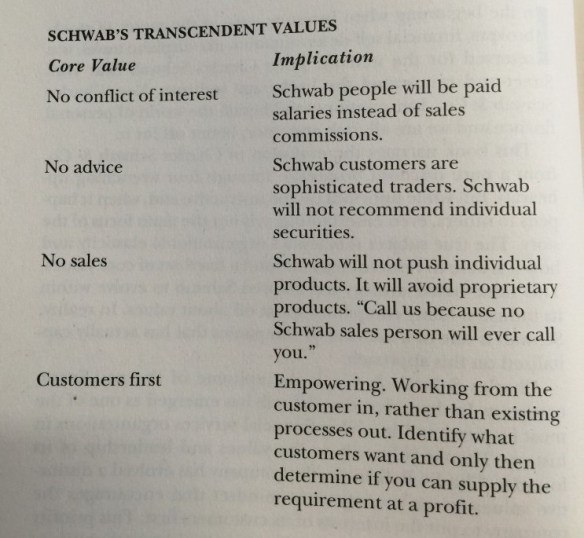
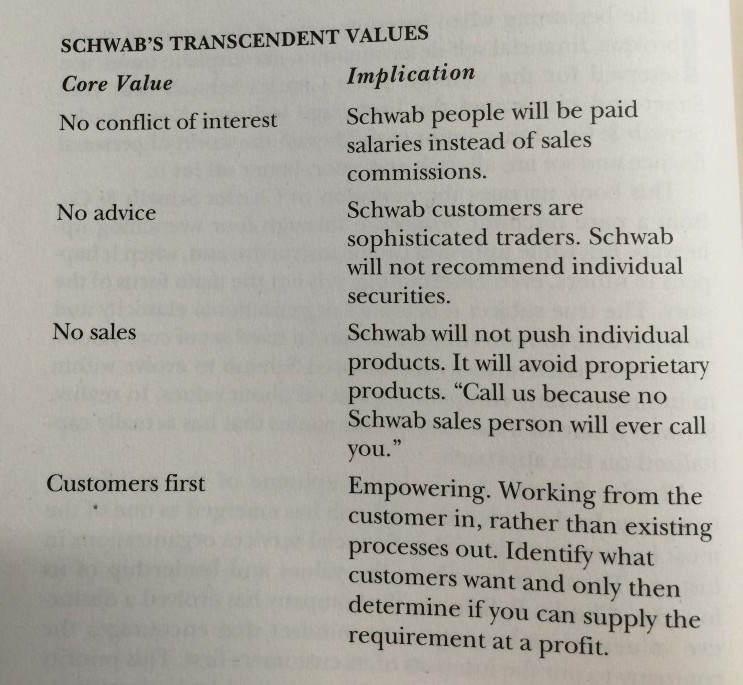
schwab values

You see, that above (good book from Mr. John Kador), is fantasy land now. That was 2005. Might as well be 1805.

Ancient history.

It’s Strawberry Shortcake starring in Fast & The Furious 8. Not going to happen. And you see that customer first verbiage? It’s shareholder first. Regional management told me that. Shareholders first, THEN customers. I was told.

To my face.

So you know what Mr. Nash, you win. And so do Schwab clients and other retail investors who read your words. I could feel your disheartened spirit, your awakening, your suspicion. Although I could argue specifics about fundamental indexes, in all fairness to the Schwab Robo, I find benefits to the strategy over WealthFront’s.

BUT THAT DOESN’T MATTER. 

What matters is you have a vision I wasn’t aware of. I was wrong about WealthFront’s motives. What matters is you ripped a hole to expose the hypocrisy (client first on the surface, a bitch to margins, underneath), that has permeated and changed permanently the Schwab culture. And now people will know. And that’s worth something in a world post-financial crisis, which seems to be owned more than ever by financial services and central banks. Broken values and bottom lines sum up the financial sector since 2010, in my opinion.

You have a passionate mission. Unfortunately, you’ll sell out. We all do. But we can come back. We all get a chance to come back. I did. Perhaps Mr N you will have a chance, too.

Mr. Nash? I have confidence in you.

I have more confidence that you would come back because the Kraken can’t. You can’t turn the heart of the beast into Hello Kitty no matter how idealistic you seem to be in your writing.

Oh, and I really like the beard. Did you shave it? Grow it back. Because like Rick Grimes in The Walking Dead, you are now at war.

And a beard works on you.

nash

I hope you win. I did.

Here’s Mr. Nash’s first attack.

Copy and paste (darn you, WordPress).

View at Medium.com

Bottom Line: The brokerage gods gave Chuck (Moses) the insights on how to treat clients and employees – the 10 commandments (which he wrote,) and then Moses shattered them and decided that coveting was OK, especially if it benefits your stock price. 

                               greediness

Random Thoughts (for investors):

I’m not sure of this whole roboadvisor thing. It was created out of the failure of all of us in the business to do what we said we would do: Tax harvest, rebalance portfolios, be objective, provide low-cost options, and to examine a client’s financial picture. holistically before making recommendations.

I got in trouble for that at Schwab. I was there to SELL product, not help clients reach dreams. I was a Certified Financial Planner who worked at Enterprise Rent-A-Car. Which fee-based car can I get you in? Then wave goodbye.

Frankly, fuck Walt Bettinger’s dreams, I could care less. I hope he gets cast off to an island like Mr. Windhaven. Chuck needs to take his company back (again) and align with clients and employees. Only he can kill the Kraken. Wasn’t that Liam Neeson in Clash Of The Titans?

Ohhhh, that’s what this is between Robos – Clash of the titans.

liam neeson kraken

I also do not believe in efficient markets which is how all robos operate. In other words, there’s no such things as asset bubbles in this arena. Well, let’s consult an expert, professor Bob Shiller from his latest edition of Irrational Exuberance.

“The point I made in 1981 was that stock prices appear to be too volatile to be considered in accord with efficient markets. Assuming that stock prices are supposed to be an optimal predictor of the dividend present value, then they should not jump around erratically if the true fundamental value is growing along a smooth trend.”

More.

“Fluctuations in stock prices, if they are interpretable in terms of the efficient markets theory, must instead be due to new information about the longer-run outlook for real dividends. Yet in the entire history of the U.S. stock market, we have never seen such longer-run fluctuations, since dividends have closely followed a steady growth path.”

Still more.

“There is a troublesome split between efficient markets enthusiasts (who believe that market prices accurately incorporate all public information, and so doubt that bubbles even exist) and those who believe in behavioral finance (who tend to believe that bubbles and other such contradictions to efficient markets can be understood only with reference to other social sciences, such as psychology).”

And investors were sold the story, are buying in strong to the story again, that stocks always outperform other investments.

More again from the professor (last one I promise, I’m a big fan):

“The public is said to have learned that stocks must always outperform other investments, such as bonds, over the long run, and so long-run investors will always do better in stocks. We have seen evidence that people do largely think this. But again they have gotten their facts wrong. Stocks have not always outperformed other investments over decades-longs intervals, and there is certainly no reason to think they must in the future.”

You gettin’ it, yet?

You’ve been sold a bill of goods to set a portfolio, always remain invested and don’t worry about the real earnings or valuation of the markets at the time you commit capital.

You see it’s easier for the financial services industry, whether it’s through the front door like WealthFront or backdoor like Schwab, when it comes to a robo, if you buy into it, to capture your assets during a bull market. And low cost is BIG volume.

And of course, it’s all long term. Long-term is a fuzzy blanket compliance departments love.

Sell is a dirty, four-letter word. Sell my stocks? Protect my capital? We can’t do that.

Did you forget about asset bubbles? Your portfolio hasn’t. I bet it hasn’t recovered from the 2000 Tech bubble, yet let alone the devastation from the financial crisis. And as an ultimate kick in the groin, your house went down the toilet, too.

haans moleman football

Nope. I’m not buy and hold for me or clients. I never will be. I have sell rules because the math of loss is more devastating than the wealth from gains. But I tell you this, if I did invest that way, I’d give my money to Adam Nash because his heart is in the right place.

Yea so, I like some of the research that went into the Schwab product but you seem less like cattle with WealthFront and more the butcher. And you never want to be the cattle.

At Schwab, whether you’re an employee or client, you are expendable and a number. OK, I’m not saying WealthFront is altruistic (although after examining their numbers I still don’t get how they make money for themselves) but at least there’s a vision for Christ’s sake.

At Schwab, you’re cattle to milk the bottom line. Even after you’re dead. I’m certain of it.

butcher of the cattle

Whether you invest with one or not, find a fiduciary to consult at least on an hourly basis. A fiduciary is there to help you make big, holistic life and money decisions and assist with your portfolio allocation in an objective manner. The financial services industry doesn’t want employees to be fiduciaries, to place client interests first.

It’s fine we make “suitable” recommendations, but to me that means what makes the most for the firm and ourselves. Suitability is there to protect the firm. Not you, the client. It’s to make sure that company asses are covered and boxes checked in case you get ticked off and seek to take civil action. Tax bracket, got it. I’m covered. Sell you a product, move on.

I had to pay half a million bucks to be told by a Schwab-hired attorney that “Richard Rosso, you are not a fiduciary.” No shit.

Now I am. I acted as such then and would do it again.

I’m interested to see how this battle turns out.

I’m on the side of investors, and now, Adam Nash.

I hope he prevails.

Maybe I just have a bone to pick with a large company that sought to destroy my life.

Could be.

I can’t rule it out.

All I know is we need more thought leaders like Adam to provide candid, heartfelt communication.

It’s long overdue.

And it makes me happy.

You should be too.


Retirement Lessons: Rolled From A Rock.

Featured

A version of this post appeared on MarketWatch.

“How much does your money weigh?”

If people want to engage me and discuss retirement planning, the request I have is for them to take time and think back to their first memories around money. I want them to re-engage with how their views formed in the past, shape their present actions and motivations.

We undertake journeys together – back to the genesis of financial and investment philosophies.

I maintain a passion for client stories. Money plays a significant role in each; it’s a larger-than-life character in the human chapters of life.

Many of the conversations are emotional fire starters; over time, the discussions, although relevant, share commonalities. There are the ones you never forget, too.

I had someone share how adult money attitudes were shaped by spending much of his childhood summers exploring a neighborhood historic cemetery.

So, when I encountered a retiree who learned about handling finances from a rock, well, I anxiously listened.

He said – “everything I learned financially for me began with a rock.”

rock

You see, this 69 year-old gentleman is the seventh and youngest child of a large family from Oklahoma. At 10, he discovered quiet and space and off a rural route. A wooded, gravelly patch cordoned off less than a mile from the homestead.

A perfect (and creative) location to secure his valuables from prying siblings. Over time it became a sanctuary from the vestiges of conflicts that erupt among large families.

From pre-teen to teen, an elaborate system was devised. A natural roadmap outlined on a napkin and changed often to throw off those who may become a bit curious. It was a plan which marked how valuables including baseball trading cards, cash and coins would be secured underneath a labyrinth of various-sized rocks. On a regular schedule, the hiding rocks were changed up, covered or replaced by holes under several dead trees. On numerous occasions, items were lost. Eaten.

Dug up and carried off by small animals.

He employed cigar boxes, plastic sandwich bags with yellow paper covered wire to secure them, empty Wonder Bread wrappers printed with the memorable red, yellow and blue balloons.

I couldn’t imagine what was learned from all this effort. Well, I had ideas, however, I never heard of anything like this before in over two decades helping others make financial decisions.

As we met a few times, I began to understand how weathered rocks forged this man’s money behavior. How he rolled along through retirement remembering back so many years. The cold weather, the dirty hands, the lost treasures formed invaluable habits.

So, what were the lessons learned?

Random Thoughts:

Dig deep into your financial foundation on a regular basis. Lift the rock, move earth, start digging. Get dirty, expose what’s been hidden. Before financial planning, it’s time to expose the deepest fears about retirement.  If frozen by fear, your outlook will suffer; you won’t take actions (even small ones) to get you to retirement; you’ll feel hopeless.

The mind has a tendency to head straight for worst-case scenarios which most of the time, are far from reality. I find when people begin exposing what makes them anxious about retirement and progressively talk openly with those they trust, practical habits are started and forged. Stress is reduced. Make a list of what you fear the most about saving for and living in retirement. Move one rock at a time. Work with a financial professional to create a goals-based, fear-minimizing game plan.

Focus on what weighs heavy on your retirement budget. For the majority of people I counsel, fixed expenses are like boulders which press hard on their abilities to enjoy retirement. I’m not going to make it sound easy to lighten up. It isn’t. It takes some tough decisions. It could mean selling a family homestead to downsize, taking inventory of material possessions to gift, sell or donate.

My greatest friend, mentor and best-selling author James Altucher and his wife Claudia recently dug through and discarded almost every physical item they own – family photos, furniture, clothing. Rows of green plastic garbage bags out to the curb for trash pickup (I saw the photos). Ok, I’m not advising to go to this extreme: I was shocked myself. However, the lesson here is to devise a strategy that works for you to minimize overhead expenses; a liquidation and downsizing mindset is empowering. It allows you to take great control over cash flow, relieves the pressure of big fixed costs throughout retirement.

Move mental rocks and check on things. Let’s face it: Many people think of their company retirement plans as dark, mysterious holes. They may salary defer the maximum contribution yet still have little knowledge about available investment choices, how money is currently allocated or they fail to rebalance holdings on a scheduled basis. In other words, to be an active saver is admirable however, once earnings are syphoned into retirement plans, many of us grow passive about digging into them and shifting the location of financial treasure. The money is buried so deep under the rock, it’s forgotten. It might as well be lost.

A company retirement account is most likely your greatest liquid asset, so it makes sense to check on its progress. Make a point to dig under the surface at least annually. Compare your current allocations to choices provided by your employer and examine how investments are divided. Sell down what’s done the best and reallocate proceeds into underperforming asset classes.

For example, in 2014 U.S. or domestic-based large-company stocks and bonds were outperformers. The majority of financial “pundits” were touting how in 2015, domestic-based stocks would continue a winning run. So far, it’s apparent that international stocks are improving due to favorable valuations and aggressive action by the European Central Bank to purchase bonds, much like our Federal Reserve has done in the past.

Get your hands dirty and expose yourself to uncomfortable conditions. I partner with several retirees who refuse to undertake actions that temporarily feel unpleasant. For a few, avoiding proper estate planning (who really wants to deal with their own mortality?), failing to embrace healthy lifestyle choices like annual health physicals, and transferring potential devastating financial risks though the use of insurance, has led to family stress and negative outcomes for retirement portfolios.

A roadmap based on maintenance of health, proper estate planning and use of insurance where it’s needed, can make a tremendous positive impact on the quality of retirement.

Through the years, this gentleman who learned so much from rocks and dirt as a child, started to understand how keeping the location of his buried treasure so secret, was not such a terrific idea. He began to comprehend how secrecy may lead to great loss. He has a trusted partner, his wife, who keeps him accountable for fitness goals, regular meetings with his financial advisor (me), his board-certified estate planner and a physician for annual head-to-toe checkups.

Recently, one of his grandsons, knowing the well-told story of the rocks, began to do some digging at the same location near the homestead (still in the family). After months of work he unearthed a plastic bag. In it was a 1955 Topps Baseball Box made of tin with 10 trading cards inside including one of legendary player Ernie Banks.

There are lessons right in front of all of us. Some we can trip over (literally).

If we dig deep and often, potential dangers can be uncovered, avoided; treasures can be revealed.

The graveled road of retirement can be a blessing or a curse.

A lesson is to unearth early on what concerns you the most and expose them to bright lights from trusted professionals and loved ones.

Your retirement path will be a challenge, but like a rock, you can weather it and remain structurally intact for decades.

And keep rolling…

rolling rock


Stop Thinking Now – 3 Ways to Shut Down and Live Again.

Richard M. Rosso, CFP's avatarRandom Thoughts of a Money Muse

“Death is a stripping away of all that is not you. The secret of life is to “die before you die” — and find that there is no death,” Eckert Tolle.

Reliving the past is draining. After I recall memories of the past to write a blog in my present, I can feel brain cells dying. I can sleep for two hours. The world loses color like I’m living in a black & white movie. Everything becomes one dimensional. The spirit and gift of the present-gone.

Focusing on the future and where you want to be is exhausting. And then when the future becomes the present you can’t enjoy it and you’re edgy-ready to focus on the future again. It’s the fucking hamster wheel of our nature but then sooner or later the hamster dies and the mate in your Habitrail feeds off your carcass.

It’s time for you to live in the present. Shake off the…

View original post 943 more words

What I Learned From My Teen Daughter’s First Job.

Featured

As featured in MarketWatch (well, not this “bluer” version). 

My daughter at 16 decided she wanted a part-time job. This isn’t a topic we discussed in the past so it made me curious as to her motivations.

A new adventure for daughter.

Self-reflection for dad.

Shit, I’m getting old.

There’s a comforting thought.

dad grave

I recalled my first job delivering “New York’s Picture Newspaper,” The Daily News, at 14 years-old. The route was one of the largest in my Brooklyn neighborhood. The lessons were indispensable and are still with me today.

Selling, customer service, handling complaints, the discipline to wake before 5am including weekends, to make sure papers were delivered before morning coffee, and the financial reward I earned sacrificing hours of my weekend to collect payment from subscribers. It was a challenge, yet I remember how the job fostered feelings of well-being through a rough childhood.

paper boy

I asked people face-to-face and through social media about their first jobs as teenagers.

The positive responses were overwhelming. People couldn’t wait to share. The exhilaration was contagious. Many were vocal about how the qualities they developed working as teens, were unequivocally linked to prosperity, financial and otherwise, as adults.

So, you have a teen child or grandchild who wants to work.

It’s a bittersweet moment. You’re proud; yet there’s something strangely sad about the milestone. Perhaps your teen is embracing maturity with gusto, motivated to take on new responsibilities and taking a big step to adulthood, to independence, which makes you feel vulnerable, uncomfortable.

Yea, old.

Ok, those were my issues.

As the dust settled it was down to a stack of employer paperwork; decisions needed to be made about take-home pay (you mean I can’t spend it all?). It was a chance to work closely together and set the foundation for financial strategies that would last a daughter’s lifetime.

What did we do?

What can you try?

Random Thoughts.

Celebrate the transition from payout to paycheck. Most likely, there’s been a long-standing allowance agreement at home. Sure, you taught the basics of save, share and spend early on, helping your child formulate a simple yet impressionable strategy of monetary discipline. It’s time to re-visit the discussion. The anticipation of sweat equity adds another dimension to save, share and spend.

We had a “big picture” talk, exploring options on how to allocate her take-home pay. I was there for the genesis of her financial philosophies. What an honor. My daughter’s respect for money she would soon earn was a welcomed surprise. I never was privy to this side of her. I wanted to celebrate this accomplishment; we selected an informal setting – it comfortable for her to share deeper thoughts around save, share and spend. I sought to guide the conversation, provide reinforcement for good ideas and create positive memories around how dad was proud of her transition from payout to paycheck.

Initiate the “Level 2, Triple S” protocol. My daughter thought I was referring to a new superhero (she knows what a big Marvel fan I am). No, it’s how save, share and spend grow super in proportion. It’s the “Triple S, Level 2” rite of passage. As a child, allocating an allowance or cash for chores, was important. With a job, parents and kids make allocation decisions with greater impact.

Oh, there’s another interested party looking to share in your child’s success: It’s the IRS and taxes are now a consideration. As an employee, your child will be asked to complete a W4 form to indicate the correct amount of tax to be withheld from each paycheck. For 2015, a dependent youth doesn’t require a tax return filed if earnings do not exceed $6,300, the standard deduction amount. In our case, we felt comfortable writing “EXEMPT” on line 7 of the W4; as a dependent she will most likely not exceed $6,000 in earnings for 2015. If you believe your teen will earn more than the standard deduction, then enter 1 on Line B of the form.

Begin a Custodial Roth IRA. Working leads to new investment vehicle opportunities. We plan to fund a Custodial Roth IRA and have decided on a savings allocation of 30% each pay period to be directed into the Roth as a contribution. For 2015, the maximum that can be placed in an IRA is $5,500. Even invested conservatively, the $1,500 we plan to deposit, compounded annually at 4%  has the potential to be worth over $11,000 tax-free when my teen reaches 67 years-old. Time is her greatest ally and part-time employment provides the opportunity to jumpstart her full-time retirement.

Start a cash-flow discovery exercise. As my girl has more money to spend, we plan to emphasize budgeting. It’s crucial she maximizes what’s left of her paycheck after taxes and savings. My daughter’s two biggest expenses – clothing and music downloads will be monitored using a free Smartphone budgeting application she selected.

Set aside 20 minutes each weekend to complete a “cash flow discovery” exercise to review expenditures. After all, having a pay check is exciting. Some kids get carried away and go through what I call an “independence splurge” where spending increases along with the first paychecks. Ironically, I’ve observed most of the spending is done at a teen’s place of employment as employer discounts are considered a “benefit.”

As a parent or grandparent, what have you lost and found again? At the celebration, I shared my early work memories good and bad. I opened up about the time I got fired from Stern’s Department Store. Not my proudest moment. My teen helps me re-live the best of my work habits and reminds me of why I’ve been motivated to succeed for so many years.

And teens?

Your family finds your initiative admirable; also, they’re observing how you handle multiple responsibilities outside of home and school.

Your work efforts are forging their confidence in you to handle future fiscal responsibilities.

The disciplines that begin as a working teen will sharpen and live on in you for many generations.

The financial seeds planted today have the potential to grow large.

And you just may need to take care of dad’s adult diaper bill.

Be prepared.

guy in diaper


Living Lessons From Dead Kittens.

Featured

Kittens were flying.

flying Kittens

Not in the joyful verse of a storybook tale read aloud to wind down the kids before sleep.

Distant from a place of precious fluff balls, gossamer wings; where white feathers lullaby children.

Just the opposite.

This memory jumps right from the pages of a magazine I loved almost as much as Mad.

Terror Tales.

terror tales

Bone-chilling cries.

A skyscraper wall of piercing sound – decibels of feline sirens carried three city-blocks deep, two buildings high.

I remember. Straight up at 2:10am, my nightmares, which are frequent due to a three-year horrific fight with a former employer, increasingly begin with flying, howling kittens. Fur matted in life fluids. The more kittens, the stronger the images, the stronger I cold-sweat the bed.

1975 – Drowned out pop melodies of summer booming from open windows; 70’s tunes played from Panasonic hand held radios from behind shadows, dingy shades that framed pre-WW2 tenement pane glass.

“Brandy, you’re a fine girl…”

City traffic fumes rise high and hang heavy in humidity. Inhaling them is a compromise. A choice to swelter through a New York August behind closed windows, or fool yourself into believing a blast furnace of urban air is a refreshing alternative.

I enjoyed the confluence of odors; after years they smelled like home – auto exhaust, hot tar, ethnic cooking; easier on eyes and nostrils compared to the rank of cigarettes and beer that destroyed oxygen within our small apartment.

I swear the lead-based wall paint would emit a strange odor when the worst of summer heat arrived. The walls were coated in poison. I was doomed. At night, I’d dream how the shiny white lead chips that always pooled at the baseboards, would come alive, enter my bed and eat my skin. I didn’t sleep much as a kid.

“What a good wife you would be…”

The strong signal from Music Radio 77 WABC-AM drowned out. Harry Harrison’s legendary airwave trademark phrases fade to black; overwhelmed by shrill feline vocal daggers which ricocheted off concrete, found its human auditory target, and penetrated my skull.

Urban dwellers fortunate enough to enjoy white noise and chilled air of window air-conditioning units were spared of the sounds of people living and dying in a restless city.

window AC

I hated them; all comfortable in their icy luxury.

And there was the laughter.

It was out of place. Insane.

No way in hell should giggling immediately shadow the screams. Horror squares in happy round holes just don’t fit. In psycho movies – sure, but not real life.

I approached the red brick and banged-up aluminum doors of single-car garages in rows that bordered the Brooklyn apartment complex I called home. The panic noises I’ll never forget, grew louder. It sounded like babies being tortured. And that disturbing chuckling.

insane laughter

I needed to understand what was happening. My mind screamed “run.” My legs moved ahead. Faster than the upper part of my body. Labored but steadily onward.

I was close enough to observe three pre-teen boys on a garage roof. A kitten in each hand; six small lives gripped by the mid-section, writhing desperately to break free.

The ringleader of the demon trio, I recognized immediately. That ruddy complexion, dark eyes closer to his ears than the middle of his face, the unkempt hair. No surprise it was the neighborhood terrorist, a bully to all: V. He made so much of an impression on me that today all bullies I encounter lose their identities and take on bloated, blotchy Vinny face.

He and two other soulless boys in unison were raising helpless animals above their heads and like taking jump shots with basketballs, were propelling tiny bodies into the air. I took solace in the fact that cats land on their paws. I imagined them a bit shaken, possibly injured, but still able to flee from the scene quicker than these pudgy kids could catch them.

Wishful thinking.

It was a cowardly method for a frightened brain to work through the disgusting activity unfolding before my eyes. I despised the fear that gripped me more than I hated the thugs.

Deep breaths.

I felt my speeding heart squeeze through the veins inside my ears; t temporarily blocked all other input. I needed to see the kittens. In my head, I was already cycling through save-and-escape plans; my goal was to grab as many of the injured I could carry and then run like the wind. Anywhere. Just away. How can I get this done without getting my ass kicked?

I couldn’t move faster. I tried.  I was disappointed by sludgy footfalls. As I turned the corner, as I came upon the asphalt alley between long rows of garage doors, there stood a fourth culprit.

I was shocked to see a thug at ground level. Right below where the three other boys were up and into the driveway.

I didn’t recognize number four; I thought I knew all the assholes in my Brooklyn neighborhood.

Tall, sinewy. I remember the definition in his biceps that popped his veins.

A devil in red Ked sneakers.

Kitten three released – fly in the sky.

Damn the fate of gravity.

Tiny legs, paws flailing.

I was far enough from the action remain noticed but close enough to take in the fiendish plan unfolding.

Red Ked gripped a wooden bat.

In a pro-baseball player stance, he swung with full force at kittens “pitched” to him from 8 feet above.

bloddy bat

The home run kitten-head balls were the worst.

There was living sound one second, deadly silence the next. Mid scream. Then nothing.

And again – laughter. The serious side-splitting kind.

The swing-and-miss felines dazed by a rough asphalt landing, failed to hit pavement and flee. They sort of dragged themselves off, walking with an unsteady gait. Definitely not fast enough. Much different than I imagined.

I observed the keen sweat beads on Vinny’s face as he maintained visual contact on the shaky cat balls.

Close to ripe for another pitch.

I prayed for a strike-out afternoon.

I stood unnoticed. In front of a garage – door open. Empty, dark. I sauntered into the black to gather my wits. I needed to think fast. I glanced upon an abandoned tire iron in a back corner. Upright against a cinder block wall, begging me for my attention. Not sure how I noticed it in the darkness but there it was. Calling me.

I grabbed for it hard. I held on to it like it was a lifeguard and I was about to go under for a third time.

As I accepted what I needed to do.

From dark to light.

Firm stride onward.

Closer now to red Keds, I’m able to observe how his sneakers were white at one time. Sick to my stomach. He looked at me then.

I was the next fat pitch.

No matter what I was in a strikeout zone.

No matter what.

Secure in a place where dead kittens don’t interrupt the summer, my life and ultimately my dreams (nightmares).

Looking Glass pop stuck in my head. An endless musical loop that refused to stop.

“He came on a summer’s day. Bringin’ gifts from far away.”

Surprise. Your turn to be the ball, red Keds.

Here’s your gift.

red ked

Random Thoughts.

At one time, any time, you’re at risk of becoming a dead kitten. Something bigger and menacing will swing at you, long to crush your skull, ruin what’s left of your existence.

For three years I’ve been hit repeatedly by a large corporate red Ked, a former employer spinning outright lies, bashing my reputation, attempting to take me out and away from the profession I love.

Oh, I’m staggering, my gait a bit shaky, but I won’t be tossed in front of high-paid legal bullies for another chance at a feeding frenzy. They took much from me, already. Money, family, physical and mental health. But I’m still here. And I have found my weapons.

Ready to strike. My turn to swing.

It’s these incidents, the events that position me next in line behind the next dead kitten, that ultimately define how quickly I escape and survive (thrive). Unfortunately, I know Louisville Sluggers continue to lurk; bullies are like that. Life is good. Then they come out of nowhere just to fuck with you. Dryer lint can catch on fire and take the house down with it. I heard that.

Whatever swings with murder in its eyes, will eventually tire and move on because it can’t kill me. What stays after the hit sharpens my resolve, clarifies me and steels my purpose. And I’m not sure what energy stays exactly, but I’m glad for it. Like a warm, comforting shadow. Bullies and dead kittens show up right before defining moments.

It’s all about tire irons. The strongest arsenal, the most effective weapons I possess reveal themselves deep in black corners. Just when I think I’m a sitting duck, an obliterated feline, I accept and allow what’s about to happen as if I chose it. At that point, I am a clear thinker. A fighter.

Many people look for hope in light. Not sure I get it. I’ve learned that you must venture and stumble through darkness to discover what’s good. The universe reveals itself and nurtures me when I accept my fate and understand deeply that what I’m experiencing, as painful as it may be, needed to occur.

It couldn’t have happened any other way.

Looking back, those challenging episodes have formed a perspective I’ve used to help others make their way through red Ked moments.

Death is only the beginning. A music legend once told me that death is only the beginning. Near death, too. And before he passed, he told me again. I’m thinking in life we face several deaths. Illness, divorce, loss of inner circle relationships. And the beat goes on. Then stops. Then continues. The beating is the same, the sound is different.

Before nightfall I sit in the backyard, my dog Rosie next to me. I ponder who and what I lost up to then. I sort of feel like Michael Corleone at the end of Godfather III. Alone. Thinking in my last scene I should fall out of my chair. Dead. Rosie’s hot breath yapping in my cold face.

What an embarrassing way to go for Michael.

dead michael

Except I don’t drop. I’m fortunate to remember that with each liability, every loss, I gain a greater asset.

And I’m at peace. Finally.

Dead kittens are also dead presidents. How many times have I bloodied my net worth with a bat? Oh, many. I’ve loaned money to relatives who didn’t care if my credit went bust (never again), I worked for one of the worst penny stock chop shops and had my father purchase stock I knew would go bust (sorry dad), just to collect a commission, I have over-purchased shit I didn’t need, spent extravagantly at restaurants, too much wine. All dead money that taught me valuable living lessons.

“Hey asshole, what do you think you’re going to do with that thing?”

And as kittens were falling, I kicked red Ked in the shin. Before another word, he went down. I remember one furball jump in panic over his face, her back paws scratching deep into red Ked forehead (score).

I then slammed the iron down hard on his right shoulder.

RK lost his grip on the bat.

I wanted to hit him again.

I wanted him dead.

For all the kittens.

Past, present and future.

I grabbed his weapon and ran.

Directly to my Cousin Louis’ apartment 9 blocks away. He was NYPD. Built like Sly Stallone.

When I’m asleep and I see dead kittens, I know something big and life-changing is clawing at me.

Another lesson up at bat.

From the blood.

The music plays in my head.

And they disappear.

At least for now.

I hit the snooze.

“I know what you look like and I’ll see you before long.”

Ben Nichols.

This Old Death.

kittens with angel wings

An Extended Warranty: Do You Really Need One?

Featured

As featured in USA Today for NerdWallet. 

It seems you can’t buy anything without escaping that awkward encounter just when you think your transaction is concluded.

“You can buy an extended warranty for an additional ____ dollars. Wouldn’t you like to protect your purchase?”

It feels like a wallet violation.

At least buy me dinner first.

It’s enough to keep me out of brick & mortar stores forever.

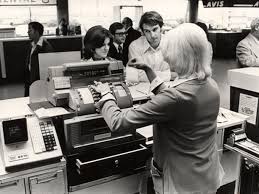
cash register

I’m not sure why I consistently feel bad saying no, and I teach financial discipline for a living. I want to feel good about what I spend money on, not guilty. It feels wrong to leave my purchase exposed to who knows what. Most of the time I politely say no and quickly move on.

Extended warranties have become a profit center for businesses, especially retailers. The peace of mind can be costly. For example, on average, an extended warranty can add an additional 10% to 25% to the purchase price of an item. There’s no doubt they’re considered a formidable driver of revenue.

When you think of the most common extended warranty, you may think of those for cars. However, they’re now offered on almost every consumer durable you buy. Recently, a good friend was offered an extended warranty for $14 on a $75 football from a national sporting goods chain. Of course he was wise enough to turn it down.

So, how do you determine when it’s smart to consider an extended warranty?

1. If replacing the item would lead to financial strain, transfer the risk.

Regardless of the cost of the product or service, an extended warranty should be considered if repairs or replacement could drain emergency cash reserves or increase your credit card debt. You don’t need to decide on an extended warranty right away. You’ll have a period of time, usually 30 days from the date of the transaction, to add coverage. Review what is covered under the standard warranty; for example, most services and goods will carry some form of protection or replacement for at least a year. If a major repair or replacement has the potential to place your household balance sheet in jeopardy, then it makes sense to transfer the risk to the manufacturer and pay for protection.

2. The bigger the purchase, the greater the consideration.

Durable goods like refrigerators, televisions, dishwashers, washers and dryers all come with standard warranties. Extended protection may not be required, as these items don’t break down frequently. However, before you say no, it’s best to investigate objective sources for repair histories for brands you’re seeking to purchase. Examine ratings on a website like www.consumerreports.org. Rarely do durables break down during the warranty period, according to Consumer Reports.

3. Forget the warranty; remember your savings account.

Instead of a warranty, consider directing money you would have spent into your emergency savings or money market account. Think of it as a cash bolster to handle repairs. In the case of a $250 warranty, add $21 a month to your budget.

4. Don’t get caught in the moment.

You may think that spending an additional 10% to 25% is no big deal after spending hundreds of dollars on something you want. Your brain will consider the purchase of an extended warranty small when compared to the greater cost of the item. As consumers we have a difficult time maintaining a rational head when it comes to additional expenditures for big purchases. Take time to step back and weigh the pros and cons. Examine the extended coverage as a stand-alone expense and the odds of using it.

5. Buy with your weaknesses in mind.

I purchase extended warranties for all portable electronics including laptops and smartphones if they cover accidental damage. I know my weaknesses; I tend to be clumsy with computers and cellphones. Make sure to examine how many instances are covered (plans will have limits) and the specifics for accident coverage. Understand your faults and use extended warranties when it protects your purchases against them.

6. How much is that item used?

Extended warranties can be useful for durable used items like automobiles and appliances. To cover your automobile, compare the costs of a dealer warranty to an independent organization like www.carchex.com, which offers several tiers of coverage (Titanium being the most inclusive). Home warranties that cover aging heating and air-conditioning systems can be worth the cost. It’s important to understand that standard maintenance is not included nor is full replacement. However, to keep appliances in operation longer and avoid the potential of frequent costly repairs, the expense of an extended warranty should be investigated.

7. Sometimes, extended warranties just don’t make sense.

Like my friend who was offered an extended warranty to protect against a flattened football, there are occasions when you’ll wonder how retailers have the nerve to sell coverage. If the purchase is $100 or less, take the chance with the manufacturer’s warranty and don’t worry about paying for an extended agreement.

In the frenzy of shopping, it’s easy to relent and say yes to aggressive salespeople.

When it comes to extended warranty purchases, don’t rush. Make the decision after reviewing the facts in the comfort of home, not in a pressured situation like checking out at a register with a line of shoppers behind you.

Many believe that extended warranties provide peace of mind.

How much is peace of mind truly costing you?


God Knows Where You Belong (Even When You Don’t).

Every year, it was an adventure I looked forward to. A chance to escape the urban filth, the smell of incinerated used Kotex pads, the endless mounds of dog shit. A daddy/son adventure.

To upstate New York.

Richard M. Rosso, CFP's avatarRandom Thoughts of a Money Muse

September 1970: “Shut the fuck up back there!”

Image

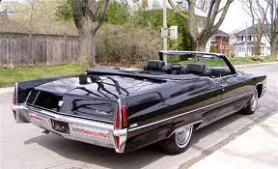
It was a cavernous black-on-black metal beast out of Detroit. A 1969 Cadillac Convertible with slick leather seats. With each turn, lane change, interchange between brake and acceleration, my little body was slung from side to side in the backseat (we weren’t fans of seatbelts back then) like an amusement ride just for me.

Every year, it was an adventure I looked forward to. A chance to escape the urban filth, the smell of incinerated used Kotex pads, the endless mounds of dog shit. A daddy/son adventure.

To upstate New York.

Where trees survived in packs and the air smelled sweet. The Catskills, specifically. The plan was always the same: First, the Catskill Game Farm (now gone), then Carson City (gone too), and last, a small retail establishment named “Roy’s,” which only sold stuffed animals.

Hundreds of them. I’ll never forget behind the front plate-glass window sat…

View original post 913 more words

Going “Double-Zero” – Five Steps To Greater Happiness & Wealth.

Featured

I remember her.

How she looked then.

this is 1972

Funny.

It took me almost as long to write this blog post; the lingering sorrow of inner-circle loss is torpor for the soul. I never get used to it no matter how many times people depart on their own or I’m motivated to head out of Dodge.

Writing about this topic resurrects mourning and at the same time, casts a different light on tenebrous memories. Surrounded by the spirits of those who are gone steels my judgment, sharpens my perspective and allows me to effectively face my own weaknesses and all-too humanity.

Human losses define my Phase 2; the new, improved and clear headed iteration of me. Sharp edges cut clean to acceptance. Free of shackles.

All human connections good or bad, add richness to life. Although the bad ones fill volumes of lesson books with razor-bladed pages. Bleed and turn, bleed more.

Healthy relationships that turn black are worse.

cancer cells

Unfortunately, life suspended in a cancerous relationship soup, sucks away enough energy to prevent the spirit from moving on, growing. Self-worth fades to the grated pallor of steel. Perspective flash freezes like moisture in a high mid-winter sky.

You’re heavy, stuck and falling.

But there’s only so much pain a person can take. Everybody has a trigger, a breaking point. Something happens that jolts an awakening. Could be as subtle as a recurring, inner whisper. A word. An action. Or as dramatic as a crash and burn (I’m Italian; we add drama to our rigatoni).

By the time that happens, healing has begun. Before you know it the circle will begin again. A new connection, a stronger chain, a weaker link. The leaded steamroller of life moves forward – flesh, blood and emotions in its wake.

I look up to the clouds often. I breathe in the vast universe to revitalize my small world. Let’s say I focus higher to stay closer to the ground, especially when I lose those I care about.

In the past, blinded by my ego and overtaken by the egos of others, the sky meant nothing. Looking back, I’m not sure what happened to replenish my appreciation of simple things. It’s all a big blur. Ironically, I’m grateful how I mistakenly granted admittance to my inner circle to the wrong people, organizations and feelings because they all lead me to where I am today.

The friendship that began in 1972, between T and me, has created several of my deepest pauses of reflection. Months, years, years beyond years do that.

She was my dearest crush in fourth grade. I awkwardly stumbled through many juvenile affairs of the heart then – most of them hidden behind painful shyness, a lack of self-confidence driven by sappy daydreams of holding hands walking home from school.

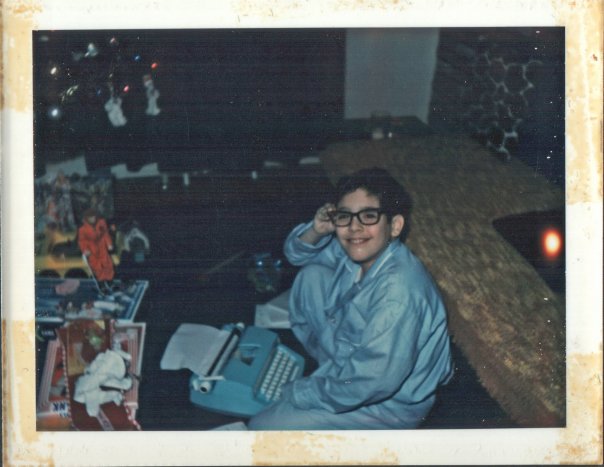
On Friday nights, I pounded away – creating love notes on a baby-blue & white typewriter to school girls who would never care to read them. I barely recall their names but I never forget hers.

Rosso typewriter

She filtered simple, daily life experiences through a happiness prism which I found interesting at such a young age. I was an eternal fatalist. I saw the worst in everything first. I went directly to the worst-case scenario.

T was diplomatic to a fault. I was jealous of her consistently positive (occasionally cloying) perceptions of the world around her. Even when diagnosed with advanced breast cancer that upbeat perspective rarely waned. I waned. When she told me, all I had for her was silence.

“Hey, I’m not dead, yet.”

I admired her nature. She was restive, I was restless. She was a healthy distraction from my parent’s invidious marriage. Everybody wanted to be her friend.

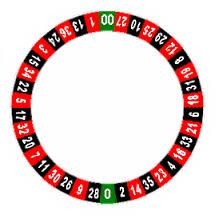
I wouldn’t call T a frequent gambler although she had a strange passion for roulette. That’s it. Roulette. When I was 14 my parents bought me a roulette set (made by Kenner Toys, I think) for Christmas. We spun the silver disc inside that black, plastic wheel for hours. The thrill of hitting chosen numbers or black or red captured our attention.

The excitement was greater for T as she consistently played zero or double-zero. It was the deep green color that stood out in a sea of dark on a felt “table.” It felt different for her. She basked in the beauty of rare moments (like hitting the zeroes). Every time she hit it, which seemed often, I would get pissed off.

Personally, I rarely played the green zone. I think the odds of hitting zero or double-zero are like a bazillion to ten. I sought stronger probabilities.

Not T.

“I like the feeling I get when I hit double-zero.”

I so wanted a to feel like that look on T’s face when that little silver ball hit 00. Or when she beat breast cancer the first time in 1994. That smile. Post-brace face. Unforgettable. A grin born from the positive attitude which defined every part of her.

I asked her why and how she believed the impossible was possible.

She said – “because I make room for it.”

That was it.

She made room: In other words, there was a place in T’s mind and heart that created space for the impossible to be possible.

Her life was defined by double-zero.

double zero wheel

Making room.

So in honor of T’s life and eternal life, I made it my mission to make room.

Go double-zero.

I started finding and cutting away my definition of cancer: Connections with people who drained my energy, fed off anger and frankly no longer fit into the positive life I was finally beginning to cultivate.

It’s not that they were bad; just bad for me.

I began to understand what she had been trying to tell me for decades.

And now, so should you.

Random Thoughts:

1). Double-zero creates space to breathe. It redefines the sky you’ve ignored. It allows you to fill your present with positive people and increased productivity as mental fatigue diminishes.

2). With double-zero you land less on black. There’s white space created for activities that fill in the hole. Great room to undertake those projects which fulfill you. The more you hit on 00, the faster your spin lands on inner peace. And it happens more often than it could in Roulette.

3). Double-zero is a clean slate. You’re open to new lessons; it’s a creator of second chances. The rebirth of a stronger inner circle.

4). Double-zero is not just a burning bridge. It’s using the intense light and heat from the fire to blind you from who and what you removed. It’s scorched earth. It’s the adult version of “you’re dead to me.” It’s cutting out, going cold turkey on cancerous people, situations, subjects, so you can live. No. Thrive. Never go back. Once you hit 00, take your sanity and cash out.

Double-zero isn’t forgiveness. Oh no. It’s inflamed forbearance. An internal act of defiance that transmits a clear, outward message to those who are unethical, untrustworthy and unwilling to to exhibit loyalties to love, silence, commitment and grace.

5). Someone is about to 00 you. Be ready. We have all been and will continue to be double-zeroed by others. It’s OK. Time to self-reflect. Most likely, you initiated 00, motivated the spin. Own it, burn it, move on.

Naturally, T would say I’m perceiving double-zero all wrong.

Damn my negativity.

negativity

Here are additional random thoughts T would place a stamp of approval on if she could.

 A). Double-zero is making that call you’re hesitant to make. The one that makes you a target, open to hurt. Vulnerable. It’s also the one that may positively change your life forever.

B). Double-zero is a complete awareness of who you are. And the great value you bring to the table. It’s destroying what society tells you is success and re-defining it outside the cubicle, middle management and others who “just don’t get you.”

C). Double-zero fuels you to fight another day. Positive energy is contagious. You’ll attract light, warmth and peace. Over time, you’ll be addicted to 00. Odds will be in your favor.

D). Double-zero is making radical changes to your finances. It’s shrinking to grow. It’s working on taking more in and having less go out. It’s freedom from debilitating debts to pursue what you love, not what you do to pay a big mortgage.

E). Double-zero is taking a stand. Recognizing and believing in the possibilities which can come from saying no more often, pursuing interests that fulfill your soul and again, cutting deep and away from all who choke off positive flow. You’ll look up at the sky more often.

Teresa, if your energy is still here, if your afterburn is around me – I feel it.

Thank you.

Rest well.

In your death, I found a secret of a life.

And I think others will, too.


Three Money & Life Lessons From “The Interview.”

Featured

Before I continue, please note I refuse to (can’t) compare Franco & Rogen to Abbott & Costello.

Somebody I know just did that.

I can’t go there.

Readers are going: “Who is Abbott & Costello?”

SMH.

abbott and costello

I’m a firm believer there’s a lesson in everything. If my focus on the present is effective and I practice stillness in the manner of a Tolle master, i can learn from staring at a rock. No, seriously.

The movie  “The Interview,” which doesn’t star the beloved comedy duo of the 1940’s of course, has been a tremendous center of attention due to a hacking of Sony Pictures (allegedly, I’m still not buying it,) by get this – NORTH KOREA.

Wait: A country where blind hair stylists can make a “living” is smart enough to hack SONY Pictures and threaten us?

Tell me another one.

north kprea Who gets a haircut like this?

Now everybody needs to see this film. Even people who insisted they wouldn’t sit through this mindless nonsense are doing it “for freedom,” as it now represents our “God-given” right. They’re drawing a line in the sand. Don’t get me wrong,  I’m sure the flick is funny, however, it’s not like taking up arms at The Alamo.

C’mon, people.

davy crockett I shall die for Rogen & Franco,” Davy Crockett.

I give up.

I’m jumping on the bandwagon.

I love you guys!!

rogen and franco

I’m getting messages in my head (about money) from the hacking incident. Perhaps the stylist at SuperCuts was trying to do a North Korean Coiffure mind meld on me. Hmm.

Random Thoughts:

1). Decisions about money aren’t easy. Don’t kid yourself and don’t have financial pros make it sound easy (most of them are in debt like you). Money decisions are tougher than deciding to release a dopey movie after a hack and a threat of global annihilation. Money emotions flow deeper than the ink in your paper currency. Selling stocks to take profits, saving money is a big chore (especially since your wages rival a North Korean Palace toilet scrubber since 2009,) identifying your money weaknesses and working to change them, taking losses for the stock “dogs” you’ve held for a decade.

However, to be successful, you need to buy the ticket to greater wealth whatever that means to you. It could be $10,000 or $10,000,000, or being debt-free outside of the mortgage. Take a stand for more money in your pocket. A small step is still a step and it should be celebrated. Even more so than some dumbass movie.

Can you imagine the conversation between Sony pictures CEO Michael Lynton and Obama?

“I tried calling you.”

“No you didn’t.”

“I would have heard the phone.”

“Well, I tried.”

“I don’t believe you.”

“I don’t believe you didn’t hear the phone.”

“Michelle was talking to me.”

“Oh, now you’re blaming your wife?”

“No, it’s just a fact.”

“And how do you not know James Franco, you live in a hole?”

“I’m busy doing president stuff.”

“Like messing up names on TV?”

“That’s not nice.”

“I’m surprised you didn’t call Sony, Sunni.”

“That’s crossing the line, movie boy.”

“We make good movies. Things blow up and shit.”

“That’s not real.”

“I just want to get this damn movie in the theatres, can I do it?”

“Which one?”

“The Interview. GOD.”

“Just for that I’m going to tell you I think Ben Aflac would be a better James Bond.”

“It’s Ben AFFLECK and NO!…Are we good here? Megan Fox wants to re-make The Sugarland Express and she’s eating all the donuts in the commissary.”

“I wouldn’t want your job.”

“No shit.”

“Merry Christmas.”

“Happy holidays.”

“Oh, now we’re going to have this fight, huh??”

No, really. The NSA has all this.

2). Prepare for surprises. So, the car broke down, you got hit on the interstate, broke a leg. Died. Your farce film got the attention of a dictator. Whatever. A key to wealth is to anticipate the unanticipated. Make sure you have 3-6 months of living expenses in an emergency cash reserve, have enough life insurance to cover the family; you signed up for long-term disability coverage at work, the beneficiaries on retirement accounts are updated, you maintain expensive durables so they last longer (when was your last oil change?). You get the picture. Can you think of other surprises, outliers, “black swans” that can devastate your finances?

3). Know your enemies. Know your financial enemies. They’re all around you. Look in the mirror. Can they become your greatest allies? For Sony, overwhelming public attention will probably generate 1,000x the ticket sales for “The Interview.”

For example, I no longer hang out with people who skip out on financial obligations. Why be around those with horrible money habits? You know them. Stay away. Can you learn from the money mistakes you’ve made, others have made? My parents were the worst with money and both died in debt with the IRS knocking on my door. I’m the opposite. I learned that disrespecting money was not part of the egg and sperm union. Bad enough I have drug and alcohol abuse, depression and lunacy in my family. I didn’t need to inherit an insane money imprint, too.

So, today’s the Friday after Christmas.

I think I’ll head to the movies.

“Unbroken” sounds good.

unbroken