Unknown's avatar

About Richard M. Rosso, CFP

I'm a money manager; a writer at heart. I love to observe the imperfections and dig into my own. On occasion, it's a bloody ordeal.

Governing Money – Lessons from the “Governor.”

In a former life, the world before hell and earth went inside out, Philip Blake was a husband, father. I think he sold insurance (and wasn’t very good at it). He probably carried too much debt, drank too much  – I’m certain erectile dysfunction was a grim reality.

I bet he fantasized about having sex with the twenty-something barista at Starbucks or even worse – the overweight college dropout with crooked, yellowed teeth and soured look from behind the register at the local Piggly Wiggly convenience haven. In other words – HO HUM. Mundane. An existence we all mistake for a life because we were told that’s what life is, ya idiot. Or as a friend would say – lame ass!

And now?

He’s bigger-than-life in a world shrinking (literally) from decay. Ain’t that a bitch!
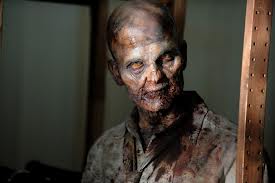
walking dead zombie A former insurance prospect? You betcha!

The “Governor” as he’s been proclaimed by the inhabitants of the fictional town of Woodbury, exists, rules, and on occasion, thrives (code for: gets some). You know what that means. Wink, wink.

It appears the whole end of the world thing has added pep to his step. He dons cool vests and brandishes a big-ass knife low on his hip. He’s handy with an automatic weapon. Yep – he’s discovered his true, higher calling, although the path he takes on occasion, would classify him as certifiably insane. Well, if the world was as it was, once upon a time – the one of sales calls, stopping for beer and milk on the way home to the mortgage payment; praying to get it up on a weekend for the wife he’s long tired of. But in this new world?

He’s the king, baby!!

the governor hip

The Governor appearing calm, collected in front of Woodbury residents. Notice the power stance (I’ve eaten a great breakfast at the coffee shop behind him and was able to leave town, peacefully).

But this new normal is truly abnormal. It requires a huge (over) dose of out-of-the-box thinking followed by unorthodox actions to keep him and his close-knit brood, alive. Fight or die. Stay alert because at any moment you may become a food source for ravenous, rotting flesh eaters and/or victims to the living who want what you have, what you worked so hard to build. All you possess can be gone in an instant. In this place, you fear the living and dead, equally.

His life demands tremendous inner reflection, strong leadership, a healthy dose of paranoia, an intense hunger for knowledge of the deademy (my zombie bon mot for enemy,) stamina, charisma, a penchant for strong tea, an instinct to survive and on occasion, cold-blooded murder of his own species (the living) which is an odd way to re-populate the planet. The deeper he believes in his mission to preserve what’s left of the human race, the more he perceives outsiders as threats. Appears almost everyone is an outsider.

fish tanks

The Governor laments the “experiments” that just didn’t work out.

The end of the world definitely raised his stature. Forced him to rise above. Imagine a former insurance hack re-born as a new-found savior. Only in the America of the living dead. Bittersweet (bloody) success. Climbing the ladder of what’s left of the human race.

The Governor fights passionately to protect what he’s re-created – a tree-lined, bucolic microcosm of once was; the time before this time or whatever this putrid shit is now. He preserves, behind big makeshift walls made of of fat tires and metal, the lives and well-being of his followers. The ones who still breath and don’t seek to eat each other.

In this Georgia sanctuary, residents adhere to daily routines like doing laundry, taking the kids to school and on occasion, they gather together to enjoy a hearty zombie gladiator fight in the center of a dilapidated makeshift arena. Hey, we must have our sports events no matter what, right?

Born from the imagination of master comic-book genius and creator of the concept for the hit show, “The Walking Dead,” Robert Kirkman’s “Governor,” is possibly one of the most complex characters to bridge the annals of comic and television history.

the governor walking dead

The Gov, played by Brit actor David Morrissey, in a pensive mood.

Something has gone dreadfully awry on the road to Woodbury (when it’s not dressed up for television this town is really the peaceful haven of Senoia, GA). You can see it in the eyes of the town folk. They’re scared of Philip Blake. Philip Blake who knocked on their doors once trying to push term insurance. In that old life, they didn’t open the door or got the dog to chase him. Maybe a family pet bit him.

I guess change happens when you can no longer self-regulate (or have no reason to try) – you create the rules, acquire minions to reinforce them. Ostensibly, a bit of sanity erodes as you’re tormented by the memories of those you lost, those you cherished, to wide-mouthed bites of growling corpses who drool black goo. When your back is truly against the wall – you shake things up.

Ponder the horror long enough and the snap-crackle in your mind ostensibly goes pop. You’re no longer who you were. The person inside, the one who worried about following the lawn fertilization schedule to the letter on weekends, is in a dark place now. Deader than dead.

The Governor has allowed the demons to occupy a great portion of his psyche and they rest on his mind on a full time basis. He can’t win against them any longer, so he commands them steer them to push him forward. Hey, when in Rome!

Black inside, tortured but he’s moving. Getting shit done. Every day.

He’s been re-shaped, reborn, by the end of the world he knew and the path he cuts to cling desperately to what was. After observing him you cannot decide who’s more rotted inside – him or the staggering corpses who meander around the parameter, tripping over debris, bumping into burned-out husks of rusted autos of drivers not lucky enough to escape from rotting marauders of warm flesh.

To the people he protects, the Governor is the best thing around. He’ll do whatever is necessary to guard his flock from strangers – living or dead – as long as they’re loyal. There’s something admirable about his rise to power, his grandiose vision to take back a human race most likely lost forever; yet, his actions at times are so horrific, his thought process so cold blooded, you almost wish to take your chances with the ghouls outside the walls of Woodbury.

He does have his heartwarming moments. Like when he talks soothingly to the chained and straitjacketed pre-teen zombie  who once was his daughter Penny. He keeps  her nestled in what appears to be a human kennel, deep inside his quarters. He brushes her hair (which falls out), sings to her.

Penny snarls and snaps at him as he releases the chained collar tight around her neck – her jaws make a  sharp snap sound, directed toward his warmth, like a blind ravenous canine searching for a steak in the dark. She’s so long gone, however. Yet, it’s Philip’s very last cling to hope, to who she was, the young life with so much potential she represented. Represents still, as he works with a genius professor geek deep in the bowels of Woodbury who works fervently to discover what makes these dead things tick. And perhaps, just perhaps, a cure!  He denies the fact there’s truly no cure for what ails precious Penny (except a bullet to the brain).

Penny

A heartwarming moment as Penny noshes on body parts of the once living who faced the Governor’s wrath. 

And if you watch AMC’s hit show “The Walking Dead,” you’ve been fascinated by the Governor and his actions. Why? Because you know (oh, you do), that you can go bat-shit wacko if faced with the same horrific circumstances. You would be altered in ways you cannot imagine. You would work effortlessly to cling to what was, because what was there and now is gone changes you. Lose enough people you love, then you tell me.

There’s a little bit of Philip in all of us. 

There’s a bit of anger, insanity, in all of us. 

There’s a bit of bad behavior where the living are slaughtered, the dead walk (figuratively) in all of us. 

There’s a bit of motivation to protect Woodbury, the safe haven, in all of us.

And when we sit alone and stew about this stuff, allow the demons to play handball against  our psyche, then we are no longer insurance salespeople, stockbrokers, artists, psychologists, the “sane” ones. We are indeed – governors.

Random Thoughts:

1). Construct the walls around you (carefully). Just be mindful of the materials you use. Employ love, civility, warmth and mix in a small dose of paranoia for those who attempt to enter your Woodbury. On occasion, you’ll let undesirables through however, do what the Governor does – dispose of them quietly and explain to yourself how that person, entity, drug, drink was endangering the lives of your minions (or brain cells).

2). Be open to what breaks your current mindset. Recently, I had a revelation after an e-mail exchange that allowed me to easily remove someone from my Woodbury. Realize that Penny isn’t gonna return, put your own back against the wall, get winded. Then wake up. Instead of changing for the worse (as you’ll see in the Governor in the remainder of season 3 and 4), bounce hard against that wall and propel forward. Philip Blake has been broken by the horror of his experiences. He had good intentions in the beginning, but something really bad happened along the way. Watch your path. Create guardrails to not veer off to blackness.

3). Don’t be afraid to retaliate now. As the economy improves, I’m personally seeing, hearing, about people breaking the chains of their old employer and discovering healthier ways to make a living. Something I predicted in my book “Random Thoughts of a Money Muse.” Check out the link below, here’s a blurb from a recent CNBC article outlining the trend:

The steady drumbeat of “you’re just lucky to have a job” that played through the recession is finally starting to fade and employees may be getting ready to say, “I quit!” and bolt for the nearest exit.

http://www.cnbc.com/id/100359891

Don’t feel bad – be slightly angry about how you’ve been treated. Rise above. You’re the Governor over your fate and as the economy slowly recovers, you should get your mental minions to focus on a brighter future.

4). Get shit done. Every day. For a time you’ll seethe, give yourself that. Then go ahead and continue to tend to your walls which surround the quaint town in your mind. Eat healthier, exercise more, find better conversationalists, seek friendships where you didn’t look before. Read a book. I’m reading Eckhart Tolle’s Stillness Speaks at this time.

5). Be bad. It’s ok. Just don’t appear to be above, criticize, or correct others. You’re not perfect and on occasion, you rot and stink worse than the walking dead. And your opinion is just that especially when wrapped in judgmental tone. You’re getting tuned out, too. Fast. The Governor has convinced himself that even the horrific things he does is for the good of his little community. He’s lost the ability to judge his behavior, self correct. You cannot do the same. Oh, unless the dead want to eat you. Then feel free. Have a glass of wine, a dessert, kick a wall (I accomplished all three last month).

6). Appreciate what you have. Now. Before the dead come back and the world goes to hell. Learn to appreciate those you care about. Feel good about your possessions; realize there’s a point when too many possessions eventually own you, especially if you’re taking on debt to “own” them.

7). Appreciate and gain protection. I know I’m making fun of Phil being a pain-in-the-ass insurance salesman in another life, but do not discount the need for life insurance. Bypass the salesperson. And think term insurance. It’s the cheapest, purest type of insurance. One of the best life free life insurance needs calculator out there is here:

Life Insurance Needs Calculator

For insurance quotes investigate http://www.selectquote.com or http://www.matrixdirect.com.

8). Know your enemies. Inside and outside your skin. Which emotions hold you back? Are there people in your life who do the same? Self assess, write it out, drink some strong tea or coffee and take some time to analyze. Then toss out of Woodbury, those threats to your well being.

9). Learn to let go. When the Governor lost his beloved Penny to a samurai blade to the head, you can tell how broken he was and about to become (terrific acting by Mr. Morrissey). You need to let go of what’s dead already. A love, a longing, a feeling, a thought, a friend, a lover, an actual shopping cart with wheels that work at the supermarket. Learning to let go means less stress. Laugh more.

10). Stand like the Governor. I mean it just looks cool, right? Hands on hips. Your body language says a lot about you.

DSC_0370

The set of “The Walking Dead.” Note the tire, metal walls. Also, the building in the background (with ladder) was the place where the Governor & Michonne fight was filmed. 

11). Don’t lose yourself in anger and regret. With his beloved Penny gone, the Governor has lost all hope (and sanity). He is consumed with the torment that goes along with surrender of the traits which make one human. And a white-hot anger about his failure to protect Penny was enough to break his sanity. Regret and anger has now overwhelmed every thought, each motivation. Perhaps a cure against living death was close.

It didn’t matter now.

It was sweltering on the “set” of Woodbury during Season 3. Then he emerged. Walking behind us. David Morrissey. In his cool signature Governor vest. Carrying a script.

When I asked my daughter why she sat off to the side instead of joining me in a discussion I was having with him, she said bluntly:

“Dad he scares me. He’s the Governor.”

Comic Gov

The Walking Dead comic-book version of the Governor.

Impressions are everything.

Aren’t they?

From mental imprints, projections are born.

Out of grief.

Fear.

Anger. 

Regret.

Don’t let them consume you.

Work to break free.

Today.

I have faith.

You’re not the Governor.

A new season of “The Walking Dead” begins October 13, on AMC – 9pm/8pm CST.
 

A Folded Cardboard Holiday. Four Ways to Stay Alive at Christmas.

Featured

I’m sort of numb at Christmas.

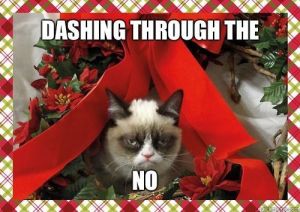
grumpy christmas

The holiday has clearly lost some of its sparkle.

Christmas reminds me how relationships, like antique glass ornaments, can so easily shatter. Shiny bright one day, swept up in a Dyson the next. As if the sparkle never existed. Unfixable.

The systemic problem with Christmas is it stirs ancient thoughts and ignites the mental bias called anchoring. I dare you to gaze at a tree ornament that you’ve unpacked every year over the last ten (or longer) and not recall “the moment.”

Such strong feelings. The weeks up to Christmas drain me like walking in heavy boots through 5 feet of wet snow. You recall ghosts of holiday celebrations past. Decades merge; 1982 is a freaking blip ago.

The weather the day you first hung the ornament from the artificial Christmas tree; you re-live that, too. The eye color, hair shade, smell, of the person who bought that holiday trinket to make you smile; now the damn thing has a life of its own, and holds a wealth of memories you would sooner forget. But you can’t. The person who bought it is either missing (by choice), dead, or probably has long forgotten the purchase (also by choice).

Admittedly, most of the year you don’t think about it. Until..

You resurrect decorations from the yellowed plastic tomb stored in the garage. From a container marked “CHRISTMAS CRAP.” Then you’re back in the moment and usually it isn’t good. Oh, you can throw the shit away, who would care? But you don’t. Sullen, you hang it again from a tree branch. Another year.

Stab me with a candy cane, it’s fine: I can take it.

This year after exhuming a memory, I lost track of the day. It was silly; I realized I had been sitting on the dusty floor of my garage for an hour and a half. Lost in space, missing time, stuck in “the moment.”

santa slay Awww

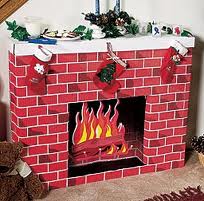
Even cardboard can pull the past into the present. At a friend’s house recently, a collector of vintage kitsch, a flood of past holidays washed over me. There in the corner, looking as new as the ancient day it was originally unfolded, was a Christmas adornment I haven’t seen in at least a decade.

Funny, when I saw it I immediately became mired in a tinsel-laden time warp. I went speeding through holiday backroads; exiting at 1972, the year I first admired my own cardboard and electric (what a lethal combo),

cardboard fireplaceFireplace!!!!!

It was a lousy Christmas. My mother after a week-long binge of booze and pills came home from God-knows-where, focused on the fake Christmas tree I just finished decorating. She picked it up from the middle pole and like some form of petite, brunette-elf weightlifter, flung it out our third-floor living room window. Graceful and horrifying at the same time.

I think there were like 6,000,000 lights secured around this thing. In fact, there were so many light sets attached that when the plastic-pine cliff diver advanced from the window, one of the light strings got caught on the way down causing the tree to swing back and forth about 10 feet from the ground like some type of sardonic holiday pendulum.

Two days after, a favorite cousin visited. A savior of sorts. He brought the fireplace along with small, wrapped gifts. On December 27, I had Christmas revisited thanks to Michael. We put together the fireplace, secured the lightbulb behind fake flames. It might as well had been the real thing. The warmth was real. A cousin made my holiday.

I never forgot.

Maybe good things come out of Christmas memories after all.

Random Thoughts:

1). Tell People you Love them. Now. Today. Even when they don’t feel the same. Even if they walk away. Even if they don’t respond.Today is the day to tell them exactly what they mean to you and you’ll be there for them because your heart and soul can’t change. It won’t change. Don’t compromise.

2). Christmas is not a day, or a holiday, it’s a mindset. The harsh glow of bad memories are fine even if they pierce like extra-pointy tips of holly. The rotten ones are tough yet you must look beyond them and work hard find the lessons that move you forward. Embrace what was and analyze how it made you the person you are today.

3). In times of despair, who will save your holiday? Be open to the signs. Be open to those you’ve been closed to before. You never know the lessons they’ll teach you, the memories they’ll create for you when you unpack aged ornaments next Christmas.

4). Now is the time to tie up loose ends. With people. With money. Step back. Foster ties with those who create energy, and cut away the ones who take it away. On occasion, you’ll be the one who’s cut and never truly understand why. There’s a humility, a frailty to being cut. It feels hopeless. Like a Christmas tree cast from upper floors. Then, out of nowhere – hope emerges. What a surprise.

At the end of the year, it’s a good idea to double-check the beneficiaries on retirement accounts and life insurance policies. It’s also an opportune time to decide how you’re going to increase your contributions to retirement plans or work to pay off credit card debt in the new year.

My middle name is Michael.

I demanded my mother have it changed after that Christmas in 1972. She obliged out of guilt. It was a way to always keep a special cousin in my heart.

After losing contact with Michael years ago, I found out that he died in 2008.

Alone. From AIDS.

In a motel room in upstate New York. He was dead a week before they found him.

I wasn’t there. I never knew.

I missed my chance to tell him how much I loved him. How much he saved me that day.

I sent him a message from my heart, as I stared, lost in another place, at a friend’s cardboard fireplace.

I asked Michael to forgive me. I thanked him for what he did for me.

Don’t miss your chance.

Today’s the day..

Your day to unfold love, gratefulness, blessings.

A day to find your fireplace. Your hearth.

Light it.

Sometimes the Gifts you Seek…

The van was rust. Well, mostly rust. Rust colored.

rust

When the 1984 Dodge “classic” stopped, the squeal from metal on metal, lack of brakes, compelled me to look out my driver’s side window. The piercing noise caused me to wince. And it pissed me off.

Sitting there, in my car, at a Valero, rummaging for change, texting a friend, I can see this bag of Detroit bones, held together by some form of metal miracle, had stopped perpendicular and was there just for me.

Oh joy.

I knew I was lingering at the auto vacuum/air oasis, off in a corner, way too long. It’s that time of year when idling more than three minutes anywhere attracts beggars like a gunshot on “The Walking Dead,” attracts well, the walking dead.

“Sir, are you going to use the air?”

I grimaced – Wondering what the catch was. He continued.

“If you are, can I please pull in behind you? I just want to use the air you don’t use. My tire is really flat and I don’t have enough money to pay for air. I just used my last dollar on gas.”

“I’m sorry,” I said. “I’m here to use the vacuum.”

The little black man hobbled away politely. I pulled my eyes away. Before I did I noticed the blue handicap parking tag dangling from the rearview window. Figures. I continued a text where I left off…

*****************************************

Recently, I visited a friend at her fashion boutique. She was showing me a couple of gifts received from a friend. Simple gifts to say the least. I sort of stared at them as they occupied the floor space of a back office.

First was a wine-bottle lamp. Complete with cute burgundy lamp shade.

Second was a, how can I describe it, a real Charlie Brown-type Christmas tree. It was centered in criss-crossed wood and black tape secured it to the base.

photoWell here it is.

I  looked down. I stared again. I raised my eyes. We looked at each other. I shrugged. Overall, it’s been a strange holiday season. Gifts given, others taken away. Some still linger like ghosts which thrive in the white of tiny Christmas lights. And when they twinkle another gift of pain has been successfully delivered. Happy holidays!

drunk christmas A reasonable alternative to holiday parties.

This time of year, gift giving is in. The rest of the time, we truly don’t give a damn. Most of the year we gift heartache, turmoil, disappointment, but in a strange way, aren’t they gifts too? Not pretty. No ribbons. Like receiving a gift of soul shrapnel you swallow and then your inner self shits blood for days.

And blood for days can lead to blood for months, years, decades. As long as your memory remembers the pain. You bleed. Yet, there’s a blessing in this blood. When you step back, there’s always a release and then joy in the blood of bad gifts. Sooner or later you clot, or die. Decide.

Random Thoughts:

1). Wrapped in every life lesson, even a bad one, there is a gift. It doesn’t feel that way at first. Over time, as your heart takes the pain to dull throb, you begin to analyze the true reason behind the offering you received.

2). Wrapped in every small gift, there’s a big message. The best gifts you can share are also the least expensive. They are created from thought, kindness, rememberance, respect, bonding. We’ve lost the ability to communicate. We’ve found a way to cut people out of our lives through electronic channels. We say goodbye using e-mail and text. Our voices are dead. Bring the gift of your voice back. Empathize. Be human again. Talk. Discuss. Debate. Converse. True gifts. Gifts of self. Gifts of thought.

3). Gifts can be taken away in a moment. A special gift received can be taken away when you least expect it. Pulled from you. Taken. Never forget a gift of a moment, especially now that you realize it may quickly disappear.

4). All gifts from ex-lovers, ex-friends, ex-inner circlers (is that a word, who knows) should be trashed, donated or returned. Or a combination of the previous. Charitable donations are preferable, you may receive a tax deduction. Make someone else happy from your grief. You’ll feel fulfilled. Trashing is fun too if you can smash the sentiment first. A combination always works best for me.

5). Watch the re-gift. Never re-gift the pain, disappointment or baggage you’ve received from another or caused to yourself. Never re-gift an image of what you think another person should be, just because you believe it should be. Never re-gift guilt, betrayal. Start fresh and gift good things.

6). Never forget: The gifts you seek or want, are most likely the gifts you don’t need. You just think you need them. Time will prove how what you want or desire may actually be poisonous to your soul (there’s that bleeding thing again.)

Back to the vacuum and the car mats. The hobbly man pulled in behind me, obviously to use the air. He got out of the rust bucket. He began to wobble over to me. Here we go again.

“Sir, I just wanted to thank you for the two dollars for the air. You’re a real life saver. Nobody really cares about people anymore, so thank you. I didn’t think you were going to give me anything.”

“I wasn’t. I changed my mind,” I admitted. I went back to the mat-sucking business aware that my vacuum time was about to run out.

“Hey, I really like your car. Your car is my dream car.”

I stopped and looked him in the eyes.

“My car is your dream car?” I said, sort of amused. “A 2009 Nissan Maxima is your dream car?”

“Oh yea, it’s a beauty. I had a Nissan a long time ago. Those things really move. Well, have a good day sir. God bless.”

For a measly gift of two-dollars, I was given a gift. A gift of perspective. The realization that I should be thankful for what I have in the present and not sorrowful for the gifts I lost.

My dollar ran out.

I didn’t care anymore.

I stood there.

I felt a breeze on my face.

Awaiting the next gift.

ugly gift


Three Lines. Three Words. Three Lessons. Three Tips. Three Reasons to Believe.

Don’t worry. He won’t hurt you. Just sit there (three sentences).

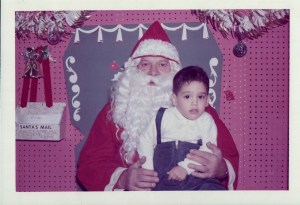
Santa

Not sure why Santa scared me so much. Clowns frightened me. Women frighten me. Threes.

Scary happens in threes. Scary movie sagas frequently occur in threes, although many times I wonder why. The Godfather movies? Three. Don’t ask me why. Don’t see Godfather III. Abomination.

On occasion you need three signals to wake you, shake you, bake you – Three hammers hit you in the head, three lightning strikes. You cry, you deny, you wake up. Maybe you wake up. Most likely, you don’t wake up. Try. I try every day.

Why?

Because your brain forms protective layers. Three from what I’ve discovered about myself. As your mind tries to protect your heart. To get through to you, to others, you need to bust through the layers.

Thinking in threes, speaking in threes, can improve your life, possibly save it.

Everything you ever need to know can be learned in threes. Everything you ever need to communicate can be accomplished in threes.

Random Thoughts:

1). “Leave me alone. Go away. I mean it.” Use this for bad thoughts, bad people, bad ideas, bad anything. Sure, you can stop at leave me alone but it’s not enough. Go further. There is a force in threes.

2). I love you. Three actions prove it: I’ve been there for you in rough times, I’ve been there for you when you disappear and return, I’m there for you now that you’re gone again. Being there through bad times isn’t enough to prove you love someone. It’s through the challenging times, confusing times, the times when you want to let go. But you don’t. And you should.

3). All you need are three rules to be successful with money. Save more, spend less, be thankful for what you have. It’s not rocket science people. The financial services industry makes it more complicated, sexy, confusing, on purpose. Now you may need a coach to help you save more, spend less, be thankful. Most of the time it’s a failure to accomplish one of the three simple rules that upsets the game plan. Recently, I met with a distressed lady who saved, had no debt (and a beautiful home), but was not thankful and wanted more. I spent hours taking her through an inventory of all the gifts she’s been bestowed, most of them based on her good habits.

Try writing out your throughts in three sentences. Let me know if it works.

In 2000, I received a call from a doctor I didn’t know. I was at work. 1pm.

“Mr. R? Your mother is here at our hospital. She’s been ill. She’s about to die.”

“I can speak with her. What do I say? I’m not sure.”

“Tell her you love her. Forgive her for the bad things. Help her to move on.”

He handed me the phone receiver.

“Richard? Are you there? I’m sorry.”

“I love you mom. I forgive you for everything. Grandpa is waiting for you.”

I heard three breaths. Then nothing. Then a dial tone.

Threes. What an impact.

On everything.


The Cleansing Fire.

What moves you forward? What compels you to change? Walk away? Stay? How much will you deal with before you say no more? What pushes you over the edge?

An awakening perhaps. And I never said it would feel great. Awakenings appear to wreak havoc on my immune system. Currently, I’m fighting the flu; as I grow stronger  my horrible chills and muscle aches loosen their grip.

I will be cleansed and better for it. A person in sync with restful mind and spirit.

Never to be fooled again.

Anger as prevention. Anger as my safety belt. Lack of anger allowed me to be fooled, less skeptical, more open. Stupid.

I’m using anger as white-hot catalyst for change. And it’s good. Anger is healthy; it should be embraced if you can control it. Despite what Dr. Phil or Drew or Oz say – anger if channeled properly, can be your lifesaver.

But can you control it? Sort of like Drew Barrymore in Firestarter. I’ll allow the heat of anger to do my bidding. I’ll maintain the upper hand.

How?

The torch of anger, colored in passion I’ll point toward my goals. I’ll allow it to turn the fear to liquid, then steam, then gone.

The torch of anger, colored in disdain (a sickish yellow), will flame on those people, those companies, those entities which forged the anger-fire path. I’ll take them to ash, sweep it aside and move on.

The torch of anger, colored in love (a blue flame) will be directed toward protecting, guiding those in my inner circle, I’ll cast a warmer heat of love and gratitude. The bad anger inside me will never harm them.

Maybe then the anger will cool.

But then I’m afraid I’ll feel nothing.

And something is better than nothing.

If my blood goes cold, so shall I.

Random Thoughts:

1). It’s acceptable to feel anger toward Wall Street, the Federal Reserve & the bankers. They messed up. They almost caused the entire foundation of the system (whatever that is), to crumble. Today, four years after the financial crisis, they’re still worth your anger as many have not been prosecuted for their crimes (ratings agencies who rated junk AAA appear to have made it through unscathed), the Fed is keeping rates at zero so you earn nothing on savings. The stock market is run by programmed traders who can suck up the bandwidth and wreak havoc. Remember flash crash? It certainly can, and will, happen again.

2). It’s acceptable to feel anger toward those who fool you (even though it’s mostly your fault). Use it as a cleansing fire. Use it as a way to burn their memories out of your head. Don’t look back.

◕ ‿ ◕ ~ LM

3). It’s acceptable to direct anger inward. If it pushes you to break a chain, get out of a rut, protect yourself against evil, sever a tie, head toward freedom, to greatness, to peace. Then by all means use it. Use it generously.

So for many reasons anger will walk with me and come when summoned.

I’ve tamed this beast.

Bring on the next.

I’ve never been so ready to fight, succumb, surrender. Out of strength. Not weakness.

How about you?

Captain America to The Hulk in the movie The Avengers:

“I think it would be a good time for you to get angry.”

The Hulk (Bruce Banner): “I’m always angry, that’s my secret.”

And what an empowering secret it is.


Five Silly Signs of Economic Recovery – What are Yours?

As economics is a social science, we all exist or swim in the soup of its existence. The best economic indicators are within 3 miles of your house. No really, they are. I’m always observant of the world, mostly my world, as a launching point for economic discussion or analysis.

I’ve learned to get better at taking in the signs of my current surroundings, stepping back, and examining how they apply to everyone else.  On occasion, I’m able to at least scope out an investment idea which ostensibly requires further homework and some hair pulling. But that’s ok. I’m thinking. I’m observing. I’m talking. I’m taking notes.

However you want to term it – Economic conditions are sluggish, sort of ok, not so hot; as a friend of mine would lament – sort of “meh.” I’m thinking the economy is somewhere between “meh,” and “yay!” Like pergatory. No fire, brimstone. No heaven. Just sort of blah. There’s an economic angel in there somewhere waiting for wings. For the first time, in a long time, I’m seeing a decent positive tone to my 5 hometown signs of economic recovery.

Random Thoughts:

1). Waitstaff at my local Denny’s is progressively less appealing to the eye. During the throes of the financial crisis, I noticed the waiters, waitresses, cashiers, looked like models. Good-looking people were serving me my Grand Slam Breakfasts. Now, not so much. The current staff messes up my order more often now, too (I ordered over easy not scrambled). In my mind, the lookers have moved on to better opportunities. I’m willing to sacrifice my breakfast for the greater good of economic prosperity.

 Why did my sexy waitstaff wander off?

2). It takes twice as long as usual for Domino’s to deliver my order of chicken wings. My pup Princess hates this even more than I do. I ask: Hey, what’s up with the wings taking an hour to fly over here? I’m sorry sir we are really, really busy. I don’t understand it. And it’s a Tuesday. I always tip the Domino’s delivery people 20 percent.

3). Less bodies at the local gym at 2pm weekdays. I shouldn’t even be there at 2pm weekdays. It seemed that during the “Great Recession,” I couldn’t find an available treadmill. Now? Rows and rows (and rowing machines). Perhaps it has to do with people waiting for their chicken wings from Domino’s and losing weight from starvation. May be coincidence but I’ll take it as a positive.

 4). Higher heads. I’m noticing progressively higher tilts to the jawlines. Like the people on the street are working through this economic cycle, getting a better handle on their household financial situations, feeling lighter, less burdened. I’m seeing more of a shine to people’s eyes. Perhaps more of a focus on the little things that are more important. I like it although I’m a bit paranoid so I’m always thinking people are staring at me for some reason. At the zenith of the housing bubble I was downright paranoid all the time. Now? Slightly. Good sign.

 I’m walking here..

5). Everywhere I go temporary license plates. I know for sure autos make up more of our GDP growth than housing does. I’m seeing more temporary tags than ever on the back of cars. They’re usually poorly printed paper tags that look like your kid drew them using black crayon on white posterboard.

Ok, these are fun, perhaps silly. We are completely entitled as deep inside we are all economists.

You know you have your five. Or two. Or one.

Share them. Write this stuff down. See if you’re correct in a year.

What  – you have anything else to do?

Not an economic sign.

Black Monday Memories & More.


Markets will fall again. Live with it.

Black Monday 1987 should remind investors that markets are people, people are irrational and “crashes” are part of the territory, unless you listen to Modern Portfolio Theory loons who believe market derails can only occur every 4,000 years.

Thanks Tom Zizka for the Fox interview.


One of the best interviews regarding the conditions high-frequency traders create:

http://www.moneyscience.com/pg/newsfeeds/Admin/item/380964/mark-cuban-highfrequency-traders-are-the-ultimate-hackers

Random Thought:

Happy Saturday!

Wake Up Parents! The Kids Don’t Want Your House!


Some houses are more legacy-worthy than others?

It was an ongoing conversation between a mom and adult daughter and me (in the middle).  Moving slowly to what I call the “legacy awareness,” stage where we begin to explore mom’s legacy, a loving daughter’s inheritance expectations (or lack of) and possible living benefits (my carefully-chosen words for gifting valuables) for both.

The dialogue flowed innocent enough, until one simple, direct question left my lips:

                   “Carol, if mom dies what would you do with the house?”

I do these things on purpose. It got real quiet. Then.

Carol: “Well, I don’t want that!”

Mom:  “It’s a great house; it was our house, mine and your father’s. You lived there too didn’t you like it?”

Carol: “Of course, but I have my own place, and all that ____,” I mean stuff.” But the word had slipped out. The “J” word.

                              Junk? That’s not junk. It’s my entire life!!

 Most likely that 3,000 square-foot albatross with shingles is not a cherished heirloom in the eyes of your kids. In fact, they would prefer you deal with the house and its contents as soon as possible – I mean while you’re alive and well enough to handle daunting tasks that come with downsizing into a more humble abode.  

Want to see the kids reduce to the behavior of a two-year old, flailing arms and legs tantrum style? Die and leave them to deal with your dwelling and its dusty contents.

Deep attachment to a house is understandable – plenty of wonderful moments were created within those walls; most likely you’ve accumulated plenty of items through the decades and haven’t parted with much in a very long time.

Parents are still storing their parent’s stuff too. There’s multigenerational hoarding going on everywhere. And I don’t see many families doing anything about this affliction.

Frankly, many retirees would rather stay put; moving is stressful. I don’t care how old you are. It’s less trouble to remain in a place that’s outgrown you and choose to live in what I call “the house within the house,” which usually is reduced to two rooms and a bath.

To make it worse, it feels wrong to upset contents that have settled deep into memories. It feels right to leave everything as is – let the next generation handle it. But do they truly want to?

Your kids are busy with their kids, careers, and still coping with the financial distress that comes with a mediocre economic recovery. A majority of households are dealing with too much debt, skyrocketing college costs, underemployment, and now this? Do the kids want an inheritance? Sure. Do they want the house? No.

As we age, memories start to weigh a hell of a lot more than brass antiques or hardly used bedroom suites. An elderly widow was ashamed to tell me she hadn’t used her fireplace since 1987 – the year her husband passed away in a chair in front of it. The old lounger hadn’t been utilized either except recently by Tiger her new tabby cat.  

In 1993, my father passed away in his home. Nineteen years later, I still find myself using Google Maps to cyber-visit the location to see how it’s changed and praying nothing hadn’t. I was the kid who wanted desperately to hold on to the house. I was so afraid I’d forget or disrespect his memory if it didn’t stay in the family. It was a sacred place to me. A real-life example of how housing can get messy. Unlike other purchases, a house gets deeply imbedded in the threads of our emotions.

 A close friend said holding on to the death house was “creepy,” and my thinking macabre. Why? After all, he was my dad. I found nothing weird about the situation. In fact, wasn’t it actually normal to feel this way? Eventually, I did drop the idea. When my head cleared, I realized it wasn’t bricks and stucco I was after. I longed for flesh and blood (dad) back.

Currently, retirees are ravaged by the Federal Reserve’s ongoing decision to transform safe money into dead money by cementing short-term interest rates at zero and artificially suppressing intermediate-term yields.  The result is a dismal level of income generated (after inflation/taxes many yields are negative) and little hope for a respectable income from high-quality bond investments. Those in the “golden years” are ravaged by austerity even though they will ostensibly live more years than their parents and should be more active doing it too. Oh the joy of longevity.

Since low (no) rates on money markets, certificates of deposit, savings accounts and corporate and government bonds will be around for a longer period than any of us originally anticipated, (thus the word cementing) retirees must think creatively about the utilization of additional resources available to them like the house.

                                        Don’t be scared. Free the cash!

I know this may sound taboo, but desperate times call for some “out of the box,” thinking – Why not consider squeezing your greatest illiquid asset?  I’m referring to – you know: The albatross with the bay windows. If you play your cards right, the house your kids don’t want can be a boost to retirement cash flow.  Would this be so wrong to consider if done responsibly?

When consulting with pre and current retirees about income planning, I notice how reluctant they are to consider the house as a future source of cash flow. I’m always the one who initiates the idea. And the faces I get when I do! The topic is horribly taboo. Why? My job is, at the right moment, to bring up sensitive topics. Part of what I do is to place myself in less-than-desirable circumstances as a first step to awareness.

Admittedly it’s an uncomfortable conversation in the beginning, however when you consider how tough (impossible) it is to earn interest on conservative investments and how challenging it is to save for retirement, strategically utilizing home equity may be the only choice available for those looking to eke out some sort of comfortable existence in retirement.

Those close to retirement are afraid of misusing home equity. We’ve all read about or knew homeowners who considered their houses as never-ending money fountains splashing cash for new televisions, cars or expensive vacations. Even seniors or retirees willing to investigate the option of utilizing home equity have been reluctant due to declining or stagnant house values and the unattractive fees associated with reverse mortgage products.

Retirees appear to be more receptive to home equity extraction later in life, especially for long-term care expenses, when instead they could mindfully draw from equity along with other income sources starting earlier and thereby enjoy a more fulfilling lifestyle.

Instead, many have resorted to re-entering the work force (if 55 or older, it appears you’re working more years than originally anticipated, too) and remaining vigilant about cutting household expenses. But how much cost cutting can you do before you need to hit the big stuff?

I call seriously considering the big stuff  “Code Red Moments.”  “And they ain’t fun,” as I’ve been told repeatedly. Let me be clear: Code Red is and never will be “fun.” These moments are accompanied by the stark realization that drastic measures must be taken to survive financially.

At the least, thinking outside the box (or the house) a discussion with family, and a strategy session with a qualified financial professional on how to go about taking the right steps is warranted.

According to a July 2012 Center for Retirement Research at Boston College Report with information from the Federal Reserve’s Survey of Consumer Finances, the average balance of a household with head (of household)  age 55-64 in 401(k) & IRAs was $42,000 in 2010 which was lower than the $45,000 held in retirement plans back in 2004.

Thank goodness for Social Security otherwise most of us would be sunk. A select few are still eligible for defined benefit (pension) plans; the number of workers lucky enough to know what pensions are continues to decrease markedly since the early 1980’s. 

            Wealth of Typical Household with Head Age 55-64, 2010                                                                                   Source of wealth
Financial assets 18,300 3%
401(k)/IRAsa 42,000 7
Defined benefit 131,300 23
Social Security 287,200 49
Primary house 82,600 14
Business assets 7,600 1
Other non-financial assets 13,100 2
Total 582,100 100

a Includes thrift savings plans and other defined contribu­tion plans.

Note: The amounts are for the mean of the middle 10 per­cent based on net worth.

Source: Author’s calculations based on U.S. Board of Gov­ernors of the Federal Reserve System, Survey of Consumer Finances (SCF), 2010.

Chart courtesy of July 2012, Number 12-13 Center for Retirement Research: 401k Plans in 2010: An Update from the SCF by Alicia H. Munnell.

At $82,000 the primary house represents an asset with cash-flow potential. And don’t feel guilty: The kids prefer you consider your needs first.

Isn’t that right?

Random Thoughts:

1). Spark a Dialogue. Granted – sounds obvious enough. In practice though, not easy. Conversations about legacies, estate plans, inheritances are difficult. Don’t be afraid to enlist a “fire starter,” like your financial advisor if he or she is objective enough and possesses a semblance of EQ or emotional intelligence. Empathy and respect are important here.

 At the least, kids should be willing to assist parents with the overwhelming tasks that go with the relocation process. Families just don’t talk enough (or at all), about inheritance matters until forced to or a life event triggers it. It’s time for this conversation to begin as soon as possible. If only so the parents are aware of your preferences.    

Grandchildren are surprisingly effective at easing the pain of regret even if their intent is limited to the excitement of spending time in a different environment or rolling toy trucks over carpet in a new location.

Recently, a grandmother of three shared with me how she decided to sell her large home and move to a more modest apartment in a suburban retirement community. She was remorseful even though the children were very communicative and supportive of the move. When her grandson’s face lit up at the feel of new carpet and a balcony and shared how excited overall he was about the new place, her remorse turned to joy. She was instantly relieved and satisfied with her decision.

2). Outright downsizing is an effective method to lower living costs. Why continue to remain in the smaller “house within the house,” situation especially if the children are willing to help?

On occasion, the death of a spouse or other life-changing episode can jump start actions.  It’s best to contemplate “going smaller”, before forced to hit the code-red button.

So, sell the big house. Let it go. Based on recent reports, it appears to be an opportune time. Use the cash to purchase a smaller place in full (no mortgage if possible). Release the shackles of the material goods you haven’t dusted in years and get them to a consignment shop. Better yet, open the door to gifting cherished items to the children while you’re still alive.

Think seriously about renting. Why not? Yes, rental rates have increased in several markets so you should examine the tradeoff between buying and selling on a case-by-case basis. First, you’ll need to gather information about the area you’re looking to reside. For example, gaining a handle on annual home price changes vs. annual percentage of rent increases or decreases would be important. From there, one of the best calculators on the internet is available for free from the New York Times at http://www.nytimes.com/interactive/business/buy-rent-calculator.html.

Keep the extra cash you would have used to purchase a residence (or at the least as a down payment) liquid in a low-cost, no-load mutual fund that invests in ultra-short bonds which will generate a small monthly addition to cash flow.  And think about splurging on a nice vacation.  After all, you’re liquid now.

3). Consider a Home Equity Conversion Mortgage Saver. I understand the concerns about the closing costs and fees that go along with reverse mortgages, but hear me out.

Data released by the National Reverse Mortgage Lenders Association (NRMLA) shows senior home equity increased by $30 billion in the fourth quarter of 2011. Seniors have $3.22 trillion in home equity available according to the most recent NRMLA/Risk Span Reverse Mortgage Market Index (RMMI) report. That’s unlocked potential you can’t ignore if tapped strategically. Remember, you must be 62 years old to consider any reverse mortgage option.

Although you’re limited by the amount you can borrow, the HECM Saver is more cost effective than a standard reverse mortgage option. For example, the HECM Saver has an upfront premium (cost) of .01 percent of your property’s value compared to two percent for a standard reverse mortgage. Also, those who utilize the HECM Saver are limited to borrow roughly 10 to 18 percent less than for the Standard reverse mortgage.

Instead of withdrawing in the form of a lump-sum cash payout, it’s best to retain a line of credit that can be used only when necessary. Work with a knowledgeable financial adviser who can assist you with establishing clear rules to trigger and monitor credit line usage. The decision should be based on a thorough examination of cash-flow needs, your overall portfolio mix and current market conditions.  The goal is to have a readily available source of funds to draw from when warranted. 

The debt associated with a reverse mortgage (or HECM Saver) must be paid in full when the borrower dies, moves out permanently, or elects to pay it off voluntarily. Any equity remaining belongs to the borrower or the borrower’s estate. If the debt exceeds the property value, the FHA (Federal Housing Association) bears the loss, not the borrower or the borrower’s estate.

One of my favorite websites designed to educate mortgage and reverse mortgage borrowers is The Mortgage Professor, www.mtgprofessor.com  operated by Jack M. Guttentag, Professor of Finance Emeritus at the Wharton School of the University of Pennsylvania. You can access, free of charge, a series of articles about reverse mortgages including Using a HECM to Strengthen Retirement Plans.

Use the recent, positive news about housing to get the thought process rolling.

It’s ok parents, really – the kids don’t need your house.  Have faith that the memories within will always be worth a small fortune to them no matter what.

                             And that is exactly  what the kids want.

What the Wasp & Butterfly can Teach you About Money.

The Wasp and the Butterfly…

When you think of a butterfly and a wasp, two very different visions come to mind.  At first glance, one looks beautiful and alluring, while the other inspires fear. However, it’s important not to let first impressions deceive you. Visuals like this can help you to remain vigilant as you weather the financial climate and manage your own investor emotions in the face of a market environment dominated by “program” traders who are able to push and pull millions in and out of markets with a single mouse click.
Here are a few rules to consider when (if) the market is “bugging” you. And it bothers many individual investors today as money has been bleeding from stock mutual funds for years now.
Random Thoughts:
 *DON’T BE FOOLED BY THE BUTTERFLY  – In the short term, market is psychology-driven and moved by mood. A  series of days or weeks in the green can be very alluring and make you feel like you’re watching a beautiful butterfly soar to new heights.
You could get seduced by this flying beauty to indulge more in stocks,  discard your strategy and throw risk management out the window.
So, how do you prevent this from happening?
Be skeptical and  slightly fearful of the butterfly. When the market is happy and ignoring the bad news, it’s time to examine your plan and see if you should be      trimming your overheated stocks or overweighted asset-class exposure based on a rebalancing plan
For example, this year the U.S. stock market specifically has been the most beautiful and soaring of butterflies. If you were a  it skeptical, then you might have trimmed your exposure from areas like high-yield bonds and utility stocks(clipped the butterfly wings a bit).
 *EMBRACE THE WASP – Just the thought of this is scary enough. When the market is looking ugliest and most ominous, it’s an opportune time to stay focused, and see the beauty in the sting of it all. Discover the beauty in buying low. Eventually, the sting of a down market will dissipate and you’ll be glad you didn’t  panic.
*CONSIDER THE FATE OF THE ANT – According to National Geographic Magazine, ants are sometimes caught in  the crossfire between larval butterflies and wasps. During an attack, ants, manipulated by chemicals, are driven to fight each other, turning them into incidental casualties.
Don’t be fooled by the wasp or the butterfly or get caught between them.
Create and follow a personalized  plan based on your goals and attitude for risk. Having clear, written investment buy and sell rules will allow you to command the wasp and the butterfly to  your advantage.
*IT’S NOT ALL BUGS   – When gathering information you’ll see, hear and read opinions that will make you feel more tempted to side with the wasp or the butterfly. In other words, you will notice more headlines designed to validate the current “mood” of the market. Fear begets fear and euphoria begets euphoria. Remain guarded with your written plan and don’t be dissuaded by captivating headlines and the media in general.
Stick to your disciplines! What the hell are they? Do you know?
Using the wasp and the butterfly as visual motivation can help you control your actions in the face of an emotional and volatile stock market — you’ll never look at them the same way again!

I want you.

Visualizing the Sole of Retirement – Do you own Retirement Shoes?

For a majority of workers, retirement is an ethereal concept. It has no real presence, density or visibility. There are several published studies available that outline how for many, retirement, especially after the economic drubbing of 2008, remains a misty pipedream, or at the very least postponed well past normal retirement age of 65 or 67. For those in their twenties and thirties, it feels even more nebulous and approaching the topic seems fruitless; retirement doesn’t appear on the financial radar for this group.

The Employee Benefit Research Institute, an institution providing objective, nonpartisan information surrounding employee benefit plans since 1978, conducts annual surveys designed to capture the pulse of Americans saving and preparing for retirement.

Specifically, their Retirement Confidence Survey is one of the longest-running public opinion studies of its kind on Americans’ attitudes on retirement and savings: The survey for 2010 reports that fewer workers and/or their spouses have saved for retirement – 69 percent, down from 75 percent in 2009. Also, fewer workers say they are currently saving for retirement (60 percent down from 65 percent in 2009). As if this wasn’t troubling enough, many workers continue to be unaware of how much they really need to save. Less than half those surveyed report they have even tried to calculate how much money they’ll need to have accumulated by the time retirement comes around.

With rates of return muted and people living longer, the pot of money needed to sustain a comfortable retirement needs to be greater than almost any other time in history. There has been a marked decrease in the younger set saving for retirement. In the year 2000, 75 percent of surveyed workers aged 25-34 reported saving for retirement; in 2010 the number hovers around 58 percent.

For those 35-44 the percentage of workers who said they saved for retirement in 2000 was a healthy 83 percent; in 2010 the number falters to 61 percent. If these trends continue, the majority of Americans will face a formidable retirement lifestyle crisis. As I ponder this dilemma I realize we all need to find a way to bring the retirement future into the present so the pain or pleasure we may experience is real and in the now.

Having 20 years to retirement myself made me understand I needed to make the next stage more real for me too, but I didn’t know how to go about it-then the shoes came along. These aren’t ordinary shoes mind you-there are memories deep in the soles.

When I was 8 years old I received my first pair of Hush Puppies. I was a lemming to advertising as a kid so when I saw the Bassett Hound mascot at a young age I was hooked. I drove my parents crazy. I had to have them and begged relentlessly. My father gave in one Saturday and purchased a dark suede-like pair of paradise for me and I wore them proudly for years, making sure to keep them as pristine as possible for as long as possible.

I drove my parents nuts about many things like only eating the bacon with the “Indian head” on the packaging, but that’s a story for another time. A year ago it happened. After all this time I bought a pair of Hush Puppies. Black suede-like material and the memories came back brighter than ever. After I slipped them on and realized how comfortable the shoes were, I wondered why I waited all these years to buy a pair.

How much bacon can one man eat?

Perhaps I just figured Hush Puppies weren’t made for adults. How silly. These things are so comfortable I can’t imagine not wearing them well into the future. And then it hit me. While on the phone with a special friend who tends to inspire me often, the idea took over.

It hit me so hard I needed to find a place to pull off the road and quickly record my revelation: At age 47, I purchased my retirement shoes. Ok so not literally; I don’t believe the shoes are going to endure that long. However the comfort I felt was something I knew I wanted to experience well into the decades. I was able to actually make a purchase today that pulled a future into the present. I realized then how all of us, regardless of age, need to make a purchase today of something we can imagine using through a different lifecycle years away and to use that good feeling to motivate us to save more for the future.

So, where are your “retirement shoes?” Have you thought about it yet? Here are some steps to take (no pun intended) to make a purchase that may alter your thinking and cushion the blow (pun intended) when retirement is the present situation: They don’t need to be Shoes and Expensive is Not Part of the Plan – Don’t use this exercise as an excuse to make a high-end luxury purchase. This is all about comfort, not cost. Keep it under $100 dollars. Someone I know bought a plain-vanilla pair of cotton sweatpants.

Random Thoughts:

1). As early as Tomorrow Increase your Retirement Savings by 1 Percent – Don’t think about it, just do it. Begin by increasing the salary deferral percentage in your company retirement plan or set aside the money on monthly autopilot in a traditional or Roth IRA. It’s not the amount, it’s the exercise.

2).  Visualize the Comfort – Walk a mile in the shoes. Use the blanket, wear the pants, read the book, eat the candy. Close your eyes and attempt to fool your mind into believing retirement is here and enjoy the comfort today.

2). Don’t Forget to Add more Comfort Items Later on – I don’t know what will compliment the retirement shoes, but I’m going to keep a keen eye out. So should you. I have a favorite website for comfort items. Take a look: http://www.vermontcountrystore.com. Time goes by quicker than you think.

3). Think Comfortization – a combination of comfort and visualization may be just what you need to jumpstart your thinking. Sounds funny, but spending a little today may help you save more for a better tomorrow.

4). Comfortization Goes Deeper than you Think – Let’s face it. You may never retire. Studies show how those between the ages of 55-64 hold roughly $45,000 in retirement plan assets, which is $3,000 lower than 3 years ago. Comfortization may be facing the fact that you need to make a change now, a big one, in your life. Forget retirement. If you make $100,000 at a job you despise and you’re never going to retire anyway, why not make $50,000 doing something you love and enjoy it since you may spend more time working than relaxing in retirement? Perhaps working at what you love is the new retirement?

Today, I’m seeking my retirement Christmas tree. It’ll be made of tinsel, you know the real stuff that cuts your fingers without you realizing it. Along with one of those vintage color wheels. Old school. I plan to stare at this tree reflect pretty colors as I drool into my lap.

I want to slip off into the next journey, under this tree. Staring as the colors change above me.

I bet that’s what heaven or retirement is really like.